From emerging international artists to the invention of other ways of practising art.
In 1959, André Malraux founded the Biennale de Paris with an ambition: to restore Paris to a leading position in international artistic creation by placing his trust in a new generation of artists. Its history, however, would be one of continual transformation. The practices it welcomes shift the boundaries of art and compel it to rethink its own rules.
After thirteen editions and a suspension in 1985, it was reactivated in 2000 at the initiative of artist Alexandre Gurita. A different direction emerged: to make the Biennale a tool for research and action, capable of supporting practices that exist beyond the exhibited artwork. Education, economics, cooperation and the transmission of knowledge became fields of artistic experimentation.
This chronology traces the stages of that transition: from an international event for young artists to an ecosystem that questions the very conditions of art’s existence.
1945–1959 · Paris and the shifting geography of the art world
After 1945 — An artistic capital called into question
In the aftermath of the Second World War, Paris retained considerable prestige, but its dominant position in modern art had been shaken. The Occupation, the displacement of artists and economic and political upheavals had altered the geography of artistic creation. New York gradually established itself as a major centre for the production, recognition and circulation of art.
In How New York Stole the Idea of Modern Art: Abstract Expressionism, Freedom, and the Cold War, historian Serge Guilbaut analyses the political and ideological conditions of this shift. The recognition of American Abstract Expressionism formed part of a struggle to define modernity and the values of freedom in the context of the Cold War.
The decline of Parisian pre-eminence did not, therefore, mean that artistic creation in France had run out of steam: it also revealed a redistribution of the power to confer recognition on art internationally.
1958–1959 — Conceiving a biennale to revitalise Paris
Raymond Cogniat played a decisive role in conceiving the Biennale. In the face of events such as Venice and São Paulo, he advocated an international gathering devoted to young artists. The project took shape in the late 1950s and gained momentum through André Malraux, appointed in 1959 to lead the new Ministry of Cultural Affairs.
The Biennale was founded with a dual ambition: to support emerging research and renew France’s cultural influence. Placed under the patronage of Cultural Affairs and Foreign Affairs, it had a diplomatic dimension from the outset.
At a time marked by the Cold War and decolonisation, welcoming artists from many countries to Paris also affirmed France’s ability to remain a place for encounters and new initiatives.
1959–1969 · An international platform for emerging artists
1959 — The first Biennale de Paris
The first edition took place from 2 to 25 October at the Musée d’Art moderne de la Ville de Paris. Dedicated to artists aged twenty to thirty-five, the event prioritised research in the making rather than established reputations alone.
At its opening, Jean Tinguely presented Méta-Matic No. 17, a mobile drawing machine powered by a petrol engine. Its presence offered a striking illustration of the Biennale’s experimental ambition: art could involve a mechanism, an action and public participation.
Jean Tinguely, Méta-Matic No. 17, first Biennale de Paris, 1959.
1961 — Expanding exchanges
The second edition ran from 29 September to 5 November. The participation of Romania and Czechoslovakia broadened exchanges with Eastern Europe. The Biennale thus provided a space for artistic circulation between countries divided by the political tensions of the Cold War.
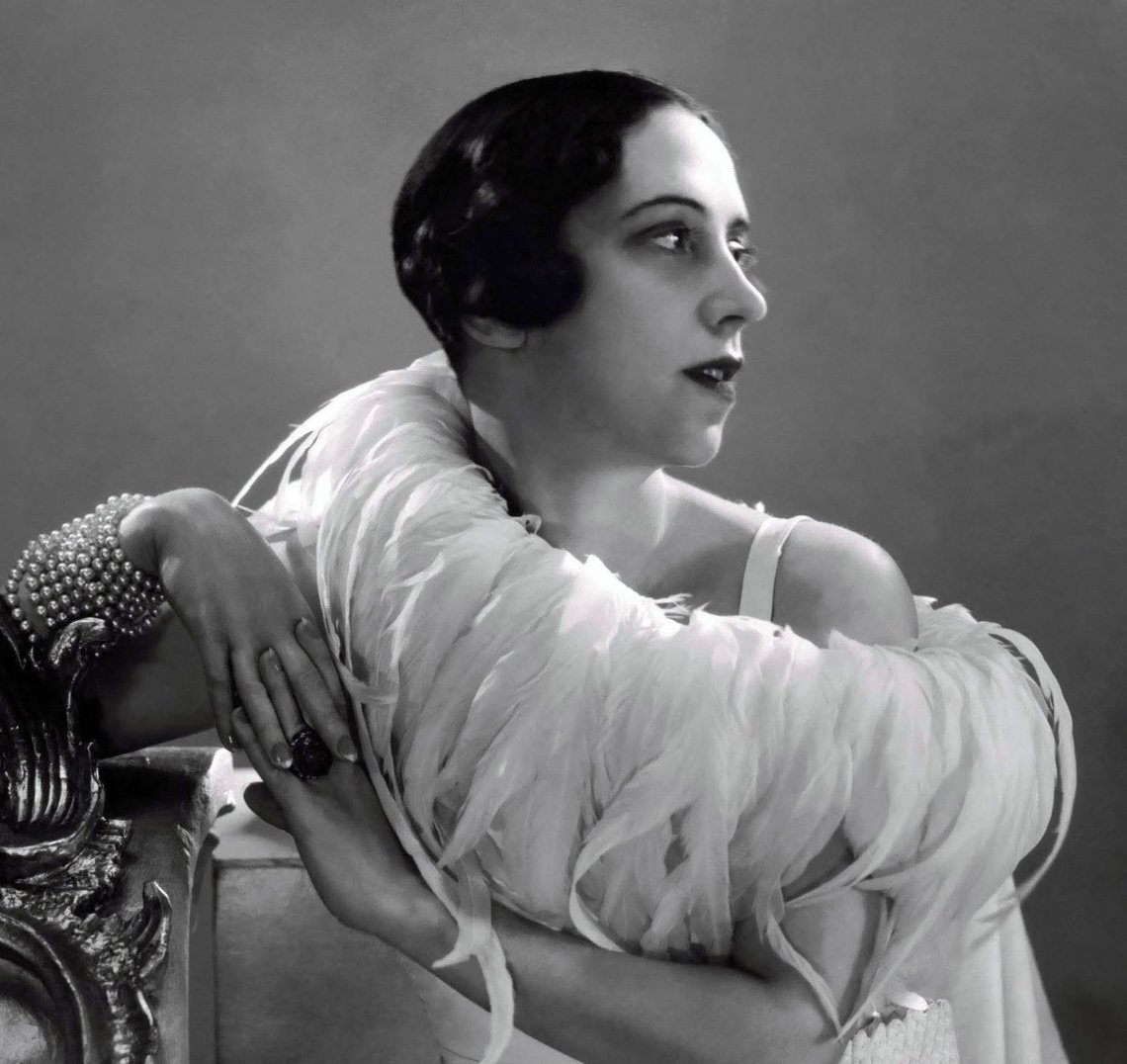
Among the figures supporting the Biennale in the 1960s was Elsa Schiaparelli, a member of its reception committee. Close to Surrealism, the designer made clothing a field of invention, provocation and challenges to convention. Her presence offers a historical echo of the Biennale’s commitment to questioning the boundaries and forms of art.
Elsa Schiaparelli, fashion designer and member of the Biennale de Paris reception committee in the 1960s.
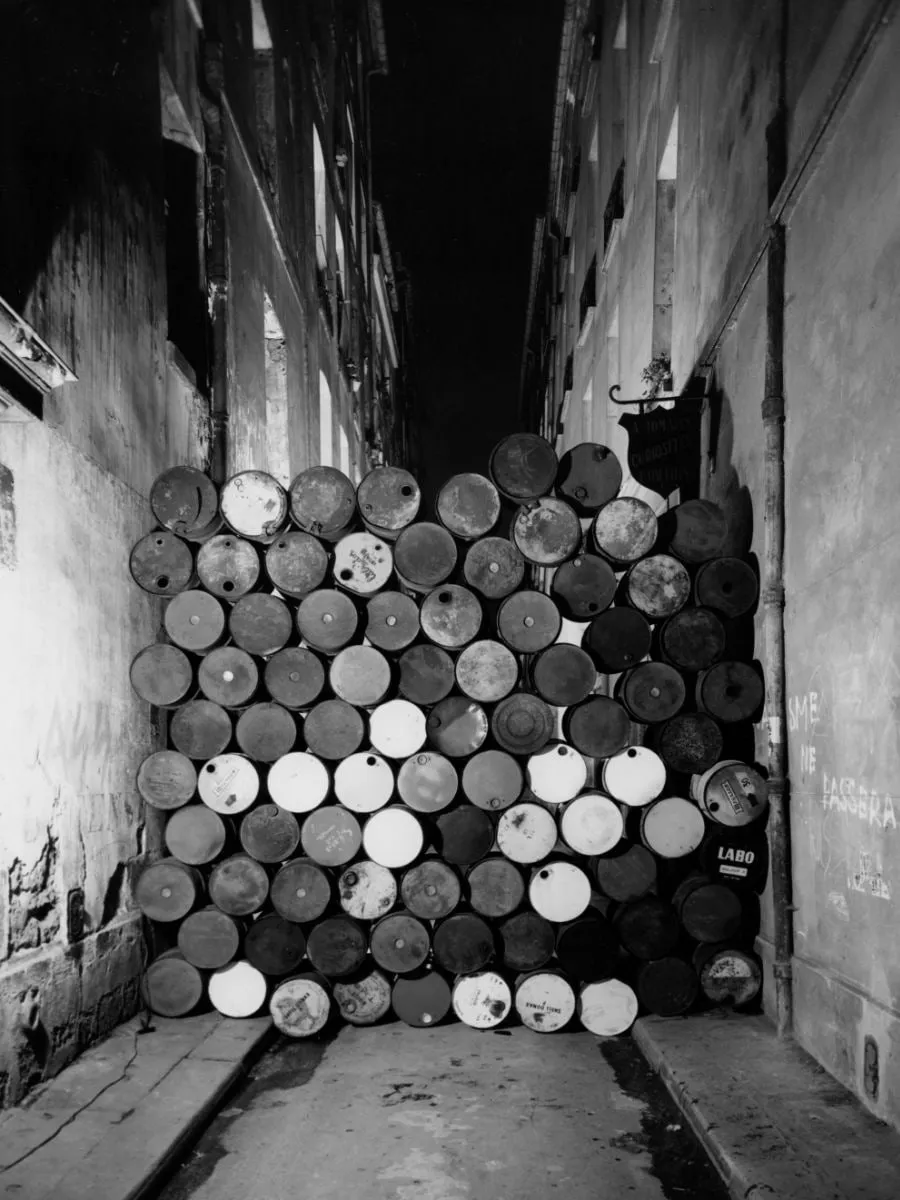
On 27 June 1962, Christo and Jeanne-Claude blocked rue Visconti in Paris with 89 stacked oil barrels. Entitled The Iron Curtain, this temporary intervention kept the street closed for eight hours and echoed the construction of the Berlin Wall the previous year. By turning a thoroughfare into an obstacle, the artists brought art into public space, into contact with political tensions and the everyday experience of passers-by.
Christo and Jeanne-Claude, The Iron Curtain, rue Visconti, Paris, 27 June 1962.
1963 — The artwork breaks out of its categories
From 28 September to 3 November, the third edition welcomed artists including Christo and Niki de Saint Phalle, whose presence is documented in photographs of the opening. Their proposals accompanied a questioning of the traditional categories of painting and sculpture, as well as the relationship between object, gesture and space.
1965 — Light, movement and perception
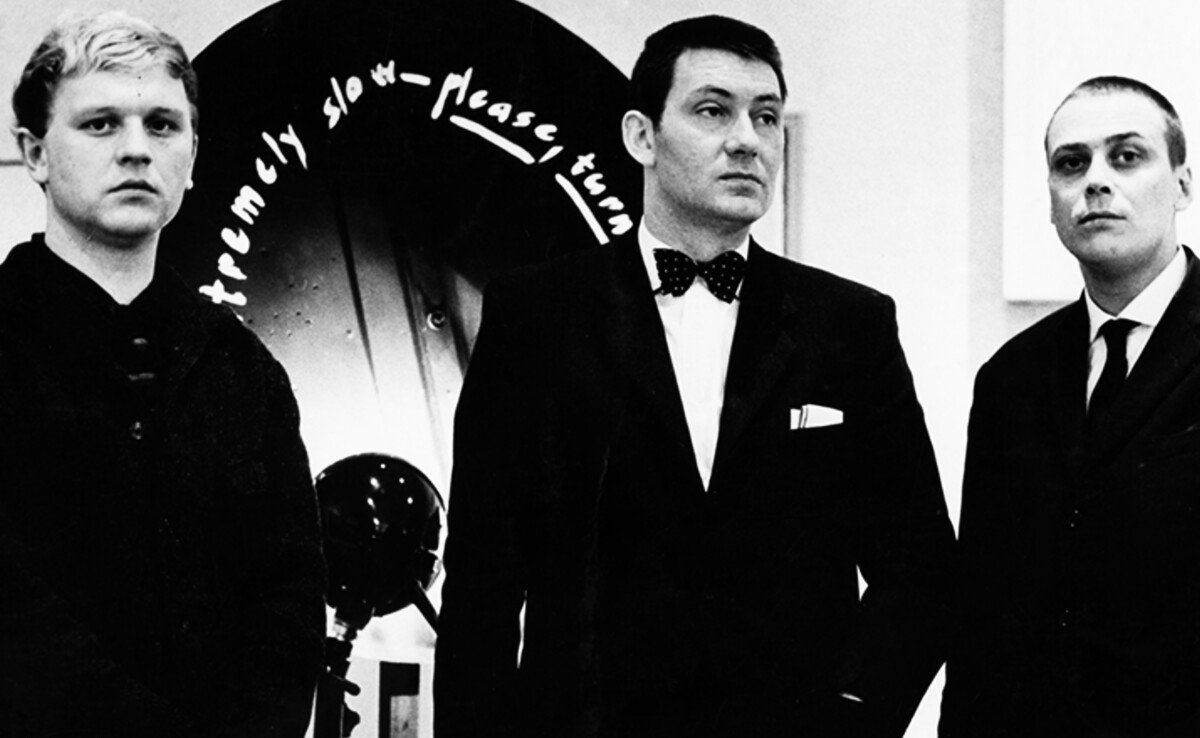
The fourth edition, from 29 September to 3 November, reflected the diversity of artistic research in the 1960s. The ZERO group, with Günther Uecker, Heinz Mack and Otto Piene, played a notable role. Experiments with light, movement and materials shifted attention towards the conditions in which the artwork is perceived.
The ZERO group at the fourth edition of the Biennale de Paris, from 29 September to 3 November 1965. The research of Günther Uecker, Heinz Mack and Otto Piene explores light, movement and materials.
1967 — Questioning the rules of art
The fifth edition took place from 29 September to 5 November. The participation of Buren, Mosset, Parmentier and Toroni brought a challenge to pictorial conventions and the figure of the author into the Biennale. The archives of their project show that the exhibition also became a place to discuss the mechanisms through which art is presented and legitimised.
1969 — From individual work to collective research
From 2 October to 2 November, the sixth edition gave a prominent place to teamwork and exchanges between disciplines. In the wake of May 1968, debates about the institution and collective creation ran through the Biennale. Christian Boltanski, Jean Le Gac and Gina Pane jointly produced Concession à perpétuité.
1971–1985 · Experimenting with and transforming the exhibition
1971 — A new direction
Under the direction of Georges Boudaille, the seventh edition took place at the Parc floral de Paris from 24 September to 1 November. Conceptual art, Hyperrealism and interventions were central strands of its programme. The Biennale sought new ways to account for practices that exceeded the usual categories of exhibition.
Joseph Kosuth, Thing, Biennale de Paris, 1971.
Joseph Beuys and Nam June Paik, Biennale de Paris, 1971.
1973 — Moving beyond national representation
The eighth edition, from 15 September to 21 October, marked a change in the selection process. An international commission now invited artists, replacing the traditional system of national participation. A network of correspondents informed its research. The project aimed to follow practices across borders and give greater prominence to information, documents and exchanges.
1975 — Acting in the city
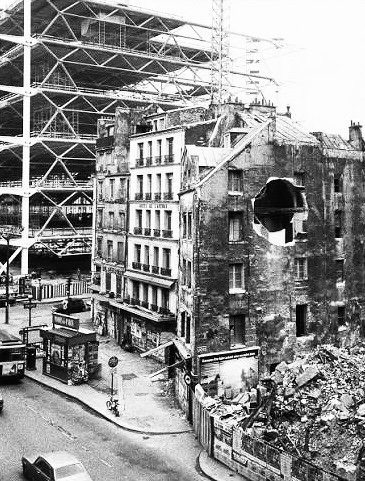
The ninth edition ran from 19 September to 2 November. On this occasion, Gordon Matta-Clark created Conical Intersect : a monumental cut through two buildings scheduled for demolition near the Centre Pompidou construction site.
The intervention situated the Biennale within the city’s transformations and opened up reflection on architecture, use and the disappearance of places.
Gordon Matta-Clark, Conical Intersect, ninth edition of the Biennale de Paris, 1975. A monumental cut through two buildings scheduled for demolition near the Centre Pompidou construction site.
1977 — Ten editions and a role to redefine
The tenth edition took place from 17 September to 1 November. This milestone coincided with the opening of the Centre Pompidou, which profoundly transformed the Parisian art landscape. The Biennale had to clarify its role in an environment where other institutions were now welcoming the contemporary research it had helped bring to wider attention.
1980 — Bringing everyday experience into art
The eleventh edition took place from 20 September to 2 November. Sophie Calle presented The Sleepers, a collection of photographs and narratives arising from an experiment in which different people successively occupied her own bed. Observation, intimacy and narrative became the materials of an artistic approach.
The Biennale de Paris team in 1980, in front of the Hôtel Salomon de Rothschild.
1982 — A new generation, an institution called into question
The twelfth edition ran from 2 October to 14 November. As new artists gained access to the international scene, the Biennale itself faced the need to renew its role in a rapidly changing cultural landscape.
1985 — The final edition of the first cycle
The thirteenth edition, presented at the Grande Halle de la Villette from 2 October to 10 November, sought to give the event a new scope. It nevertheless brought the cycle begun in 1959 to a close. Operational difficulties and the Biennale’s identity crisis led to its suspension.
1986–1999 — A history on hold
The event did not resume its regular schedule. Its memory remained present in artists’ trajectories and in the archives, while the landscape of major exhibitions was reconfigured. The first Lyon Contemporary Art Biennale, in 1991, was one of the landmarks of this new context.
2000–2017 · Reactivating the Biennale and rethinking its model
2000 — Making the institution an artistic tool
Alexandre Gurita began reactivating the Biennale de Paris. He called this approach “institutional capture”: taking over an existing institution in order to transform its aims and operations.
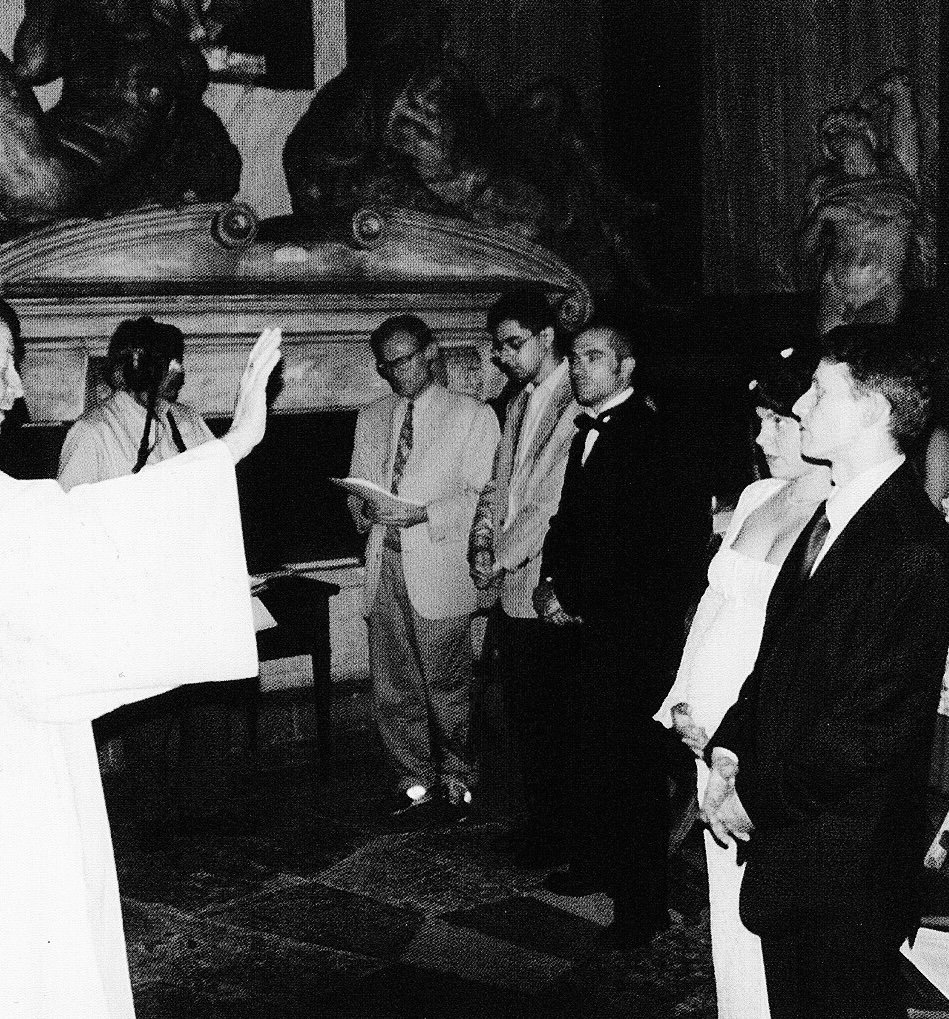
On 23 June 1999, before reactivating the Biennale de Paris, Alexandre Gurita presented his own wedding as his graduation project at the École nationale supérieure des beaux-arts de Paris (ENSBA). The ceremony brought together the parish priest of Saint-Germain-des-Prés, the witnesses and guests, including the members of the examination panel. It was a real wedding, not a performance. The scandal it provoked marked a turning point in his thinking: however radical their proposal, an artist acting alone comes up against institutional frameworks and centres of power whose interests, often unrelated to artistic research, determine what can be recognised as art. To transform these frameworks, he came to see the need to change the rules of the game: to act through collective intelligence and have an institution as a means of action. This conviction paved the way for the capture of the Biennale de Paris, conceived as a critical institution capable of transforming the conditions under which art is defined and exists.
The wedding of Clarisse and Alexandre Gurita, presented as a graduation project on 23 June 1999. Leaving the chapel of the École nationale supérieure des beaux-arts de Paris (ENSBA), where the ceremony was conducted by the parish priest of Saint-Germain-des-Prés, in the presence of guests, the media, teachers, staff members and the graduation panel. Witnesses: Ghislain Mollet-Viéville, Ricardo Mbarkho and Claudio Locatelli.
The Biennale then changed direction. It became interested in practices that do not necessarily involve producing and exhibiting artworks. The institution itself became a field of research and a space of freedom: how could it support art that might take the form of an activity, an organisation, a use or a way of life?
2004 — A return in a different form
The fourteenth edition brought this reactivation into being. Artistic approaches from different countries came together in a framework that questioned the expectations attached to a biennale. A catalogue, with a foreword by Paul Ardenne, accompanied this stage and helped make this research accessible.
Thermo-hygrograph, Gary Bigot, Biennale de Paris, 2004. Anonymous, Biennale de Paris, 2004.
2006–2008 — A biennale in real time and real places
At Sylvain Soussan’s instigation, the duration of an edition was extended to two years. The fifteenth edition unfolded from 2006 to 2008, following the timescale of the practices rather than that of a one-off exhibition.
Proposals could take place across different territories, or without a fixed territory. Artists determined the conditions of their activity. The Biennale thus sought to build itself around the practices it supported.
Soussan Ltd, Mouvement Artistique, Biennale de Paris, 2006–2008.
2008 — Learning and working together
Two initiatives extended this direction. Jean-Baptiste Farkas launched the Amicale de la Biennale de Paris, a space for regular meetings and discussions. At the same time, the creation of the Collège de la Biennale de Paris opened up an educational undertaking: rethinking art school through practices rarely addressed by conventional programmes.
2009 — The school as an experiment
The Collège developed work on methods, the transmission of knowledge and cooperation. Mobility and a modular structure made learning a collective research process. This experience laid the groundwork for the educational developments that would lead to Iheap and then ENDA.
2010 — A first decentring in Nicosia
From 20 to 23 October, the Biennale de Paris unfolded in Nicosia, Cyprus, around the question “Reinventing the terminology of art”. The initiative opened up a form of cooperation in which each context could help transform the Biennale’s methods and questions.
The Biennale de Paris in Cyprus, Nicosia, 2009.
2011 — In dialogue with New York
From 24 September to 3 October, the Biennale de Paris decentred its activities to the United States. Meetings, notably at Yale and the Queens Museum of Art, brought its proposals into dialogue with other critical and institutional traditions. The circulation of ideas and discussion played a central role in this development.
The Biennale de Paris in the United States, New York, 2011. Discussion at Yale University. From left to right: Robert Storr, Jean-Baptiste Farkas, Alexandre Gurita, Ghislain Mollet-Viéville, Bernard Brunon.
2012 — Reactivating Iheap
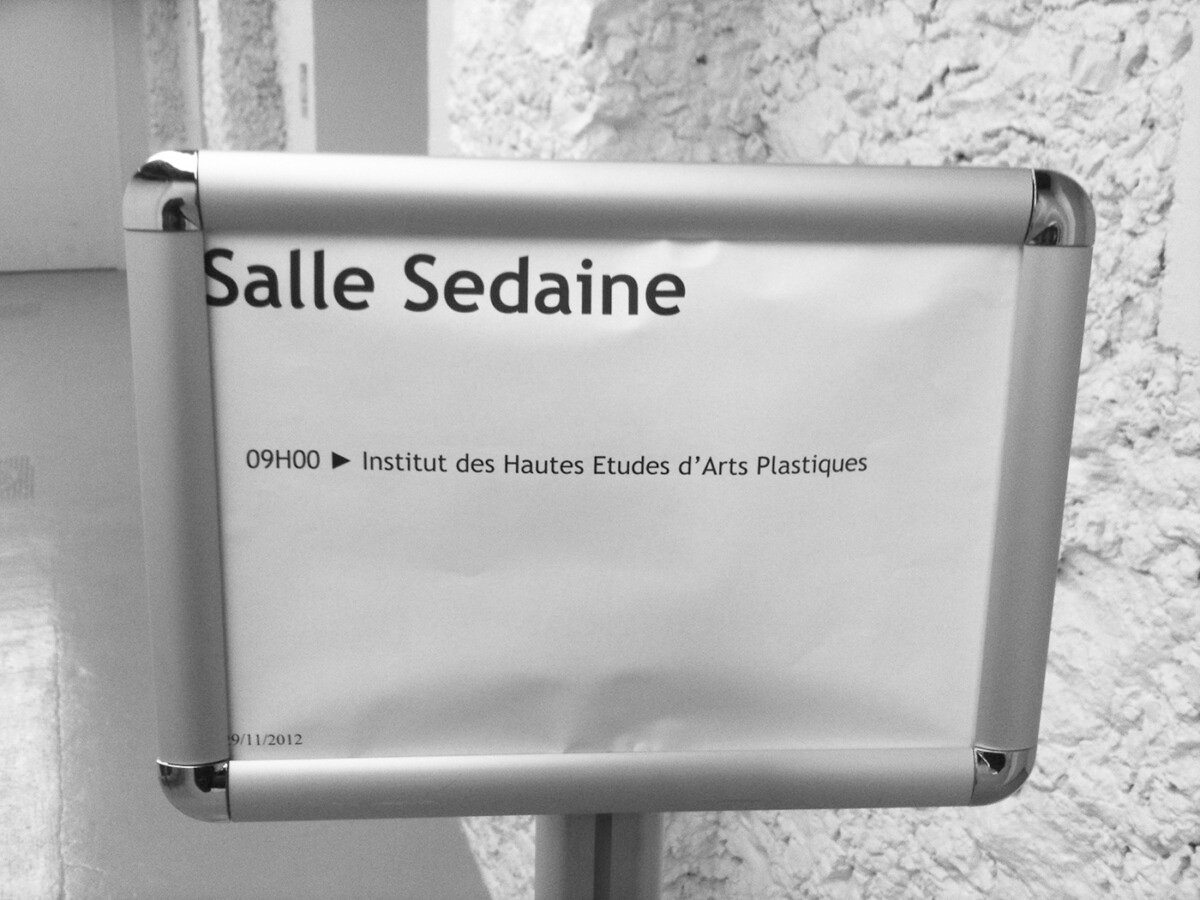
Following the same principle that had guided its own rebirth, the Biennale de Paris undertook the capture of the Institut des hautes études en arts plastiques (Iheap), founded in Paris in 1989 around Pontus Hultén. After the experience of the Collège, this initiative aimed to extend educational research and give it a lasting framework: a school for artistic research, conceived as the first of its kind. The project took shape in 2012; the first Iheap session in its new configuration opened in January 2013.
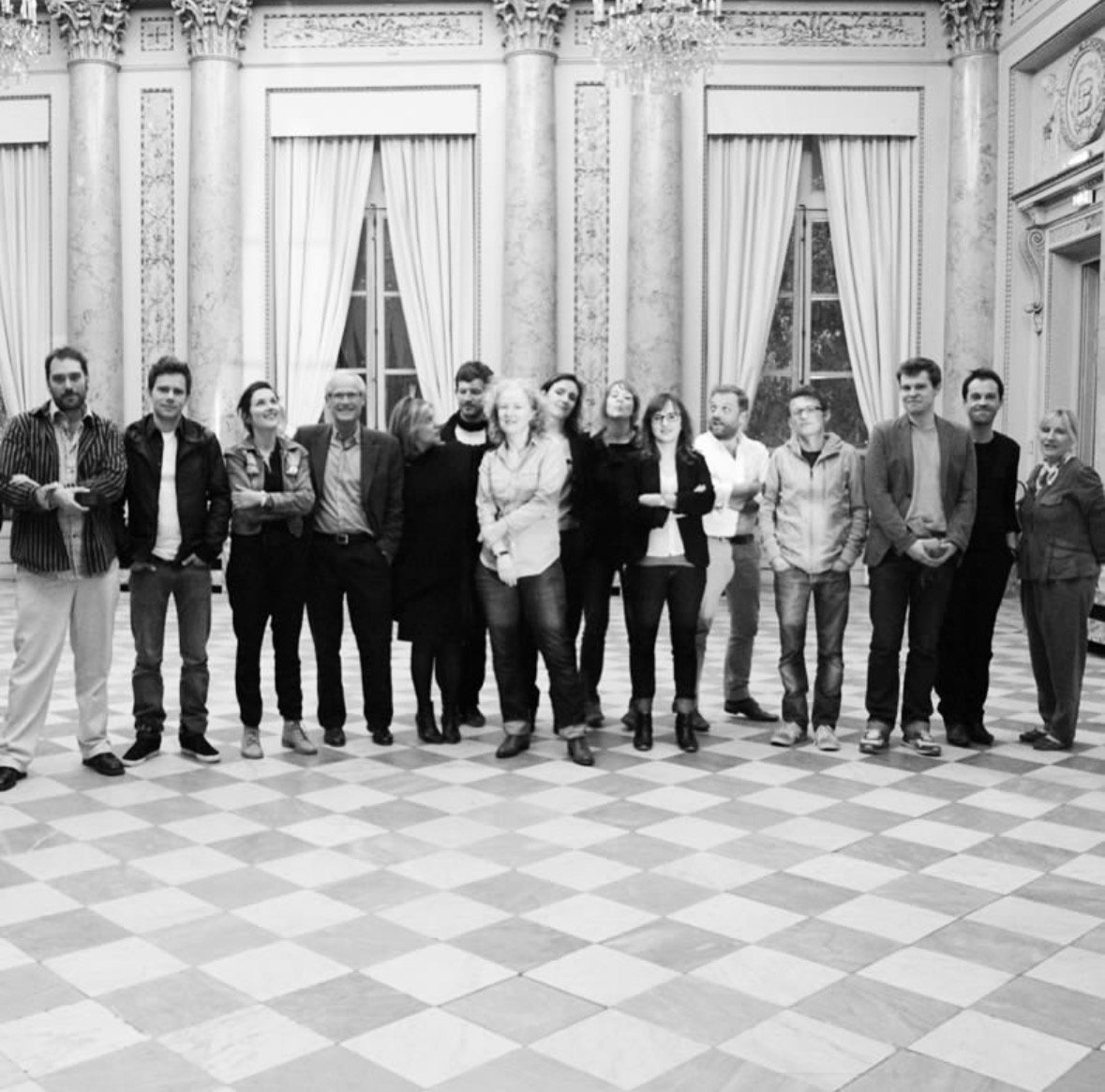
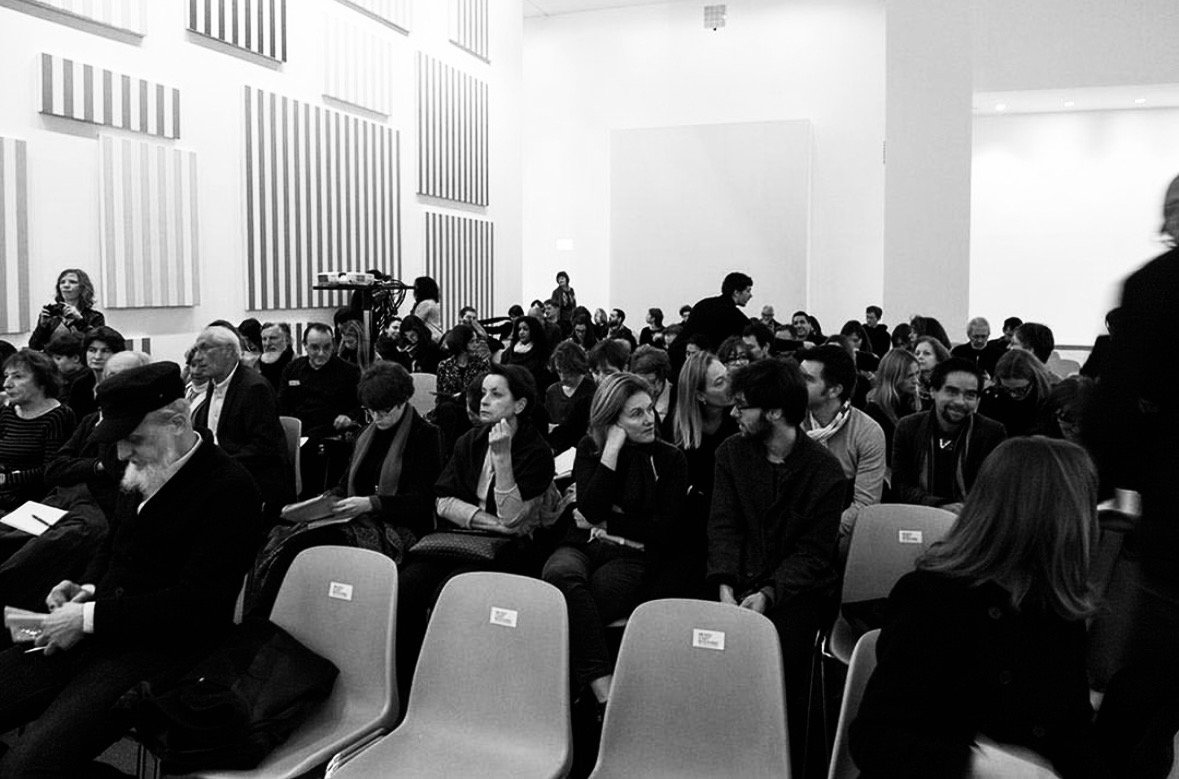
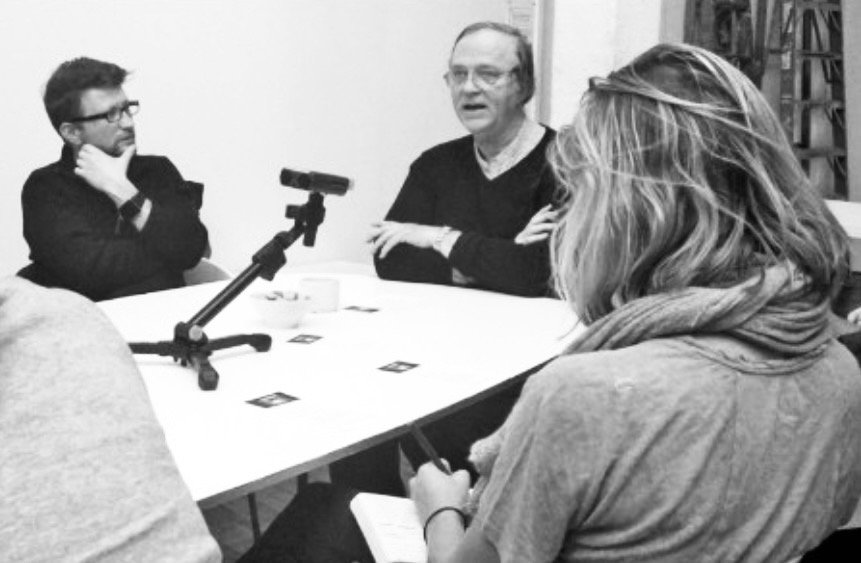
The admissions panel of the reactivated Iheap, meeting at the town hall of Paris’s 11th arrondissement in November 2012 to interview applicants.
On 11 May 2012, at the invitation of Chiara Parisi, Director of Cultural Programmes at the Monnaie de Paris, Ghislain Mollet-Viéville organised a dinner there devoted to the Biennale de Paris. This gathering provided a setting for exchanges on its directions and its approach to transforming artistic practices and conceptions of art.
Biennale de Paris dinner at the Monnaie de Paris, 11 May 2012.
2013 — Putting education to the test
On 13 January, Iheap’s ninth session opened in Paris. The programme combined research, encounters and experimentation. Its aim was to enable participants to develop a singular practice and examine the conditions of its existence.
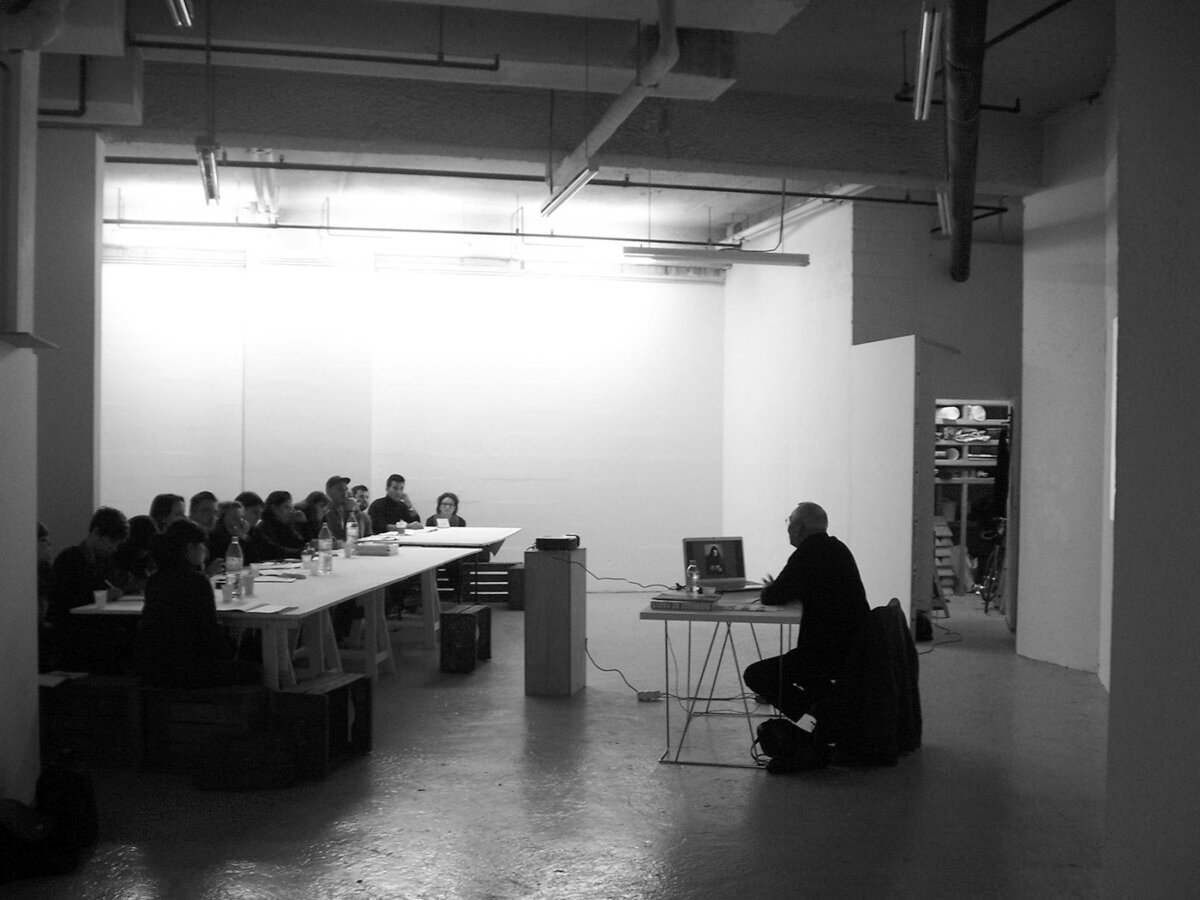
The first module of the reactivated Iheap, on 13 January 2013 at Le Moins Un, a space in the basement of a Parisian building, with art historian Denys Riout.
2015 — Rethinking the collection and expanding educational research
On 6 March, the Biennale de Paris organised the symposium “What Art Collection for the Future?” at the Musée d’Art moderne de la Ville de Paris, following a meeting held at the Queens Museum of Art in New York in 2011. Participants included Fabrice Hergott, Alexandre Gurita, Bernard Blistène, Béatrice Josse, Ghislain Mollet-Viéville, Jacques Salomon, Sébastien Faucon, Jean-Baptiste Farkas, Emma McCormick-Goodhart and Heinz-Norbert-Jocks. Discussions explored how collections are transformed by practices that shift the notions of object, ownership and conservation. In his contribution “Decollecting”, Alexandre Gurita proposed a shift from having to being and questioned the possibility of collecting invisual practices.
“What Art Collection for the Future?”, a Biennale de Paris symposium at the Musée d’Art moderne de la Ville de Paris, 6 March 2015.
That same year, Iheap opened a New York branch. This extended the Biennale’s educational work and created new possibilities for cooperation. Modules took place at several venues, in dialogue with artists and contributors from the American context.
Robert Storr and Alexandre Gurita during Iheap’s activities in New York, at ISCP (International Studio & Curatorial Program).
2016 — Bringing research and educational approaches together
From 27 June to 3 July, the Biennale de Paris in Lebanon brought together research and exchanges with local partners, extending collective work undertaken at Iheap.
Launch conference for the Biennale de Paris in Lebanon, with Alexandre Gurita and Ricardo Mbarkho, at Beirut Art Center, 27 June 2016.
On 19 and 20 November, the Alternative Art School Fair at Pioneer Works in New York brought together alternative schools and educational initiatives. Created by Alexandre Gurita and organised in collaboration with Catherine Despont and Dylan Gauthier, the gathering aimed to introduce Iheap New York and gain recognition for alternative art schools. It opened a space for exchanges on their approaches, educational models and different ways of conceiving an art school.
AASF (Alternative Art School Fair), Pioneer Works, New York, 19–20 November 2016.
2017 — Art as a field for education
From 1 to 11 November, the Biennale de Paris in Guatemala posed the question “Can art be a vehicle for education?” Meetings and workshops extended research into the relationships between artistic practice, learning and social context. Decentring became a way of producing knowledge with the people and organisations of a territory.
Invisual art workshop at the Instituto Cervantes in Guatemala, as part of the Biennale de Paris in Guatemala, 1–11 November 2017.
The Biennale de Paris in Guatemala, at the Museo Nacional de Arte Moderno Carlos Mérida in Guatemala City, November 2017.
Since 2018 · Developing an ecosystem for art
2018 — Working on the conditions of art’s existence
From 22 to 24 June 2018, the first edition of the World Forum of Art Economies (FoméA) took place at Paris City Hall. Created by the Biennale de Paris and ENDA (École nationale d’art de Paris), the forum highlighted the close interdependence of art and economics and questioned its consequences for artistic creation, artists’ autonomy and the operation of institutions. It encouraged alternatives to the dominant economic model based on the art market, public funding and patronage.
Artists, art professionals, economists, researchers, institutional leaders and people working in social and economic fields came together in conferences, round tables, workshops and debates. Incubators provided opportunities to devise new economic models suited to artistic practices and institutions, making economics a field of research and invention. A second edition is planned in Germany in 2027.
First edition of the World Forum of Art Economies (FoméA), at Paris City Hall, 22–24 June 2018.
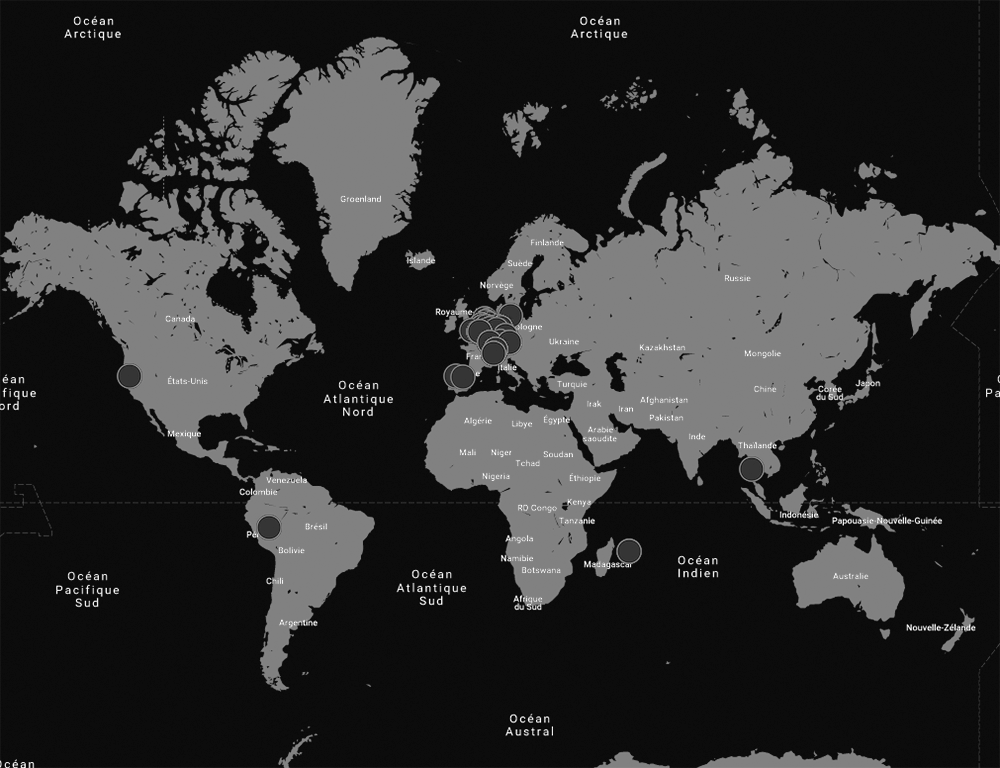
The educational research developed since the Collège continued at ENDA, the École nationale d’art de Paris. In Luxembourg, Gary Bigot initiated the project “You Will Breathe the Air I Exhale”, spanning 2018–2020, which proposed geolocating breaths on a world map.
The Biennale de Paris in Luxembourg, at the initiative of artist Gary Bigot, from 1 October 2018 to 30 September 2020. View of the map of breaths on 7 March 2019 at 4:24 a.m.
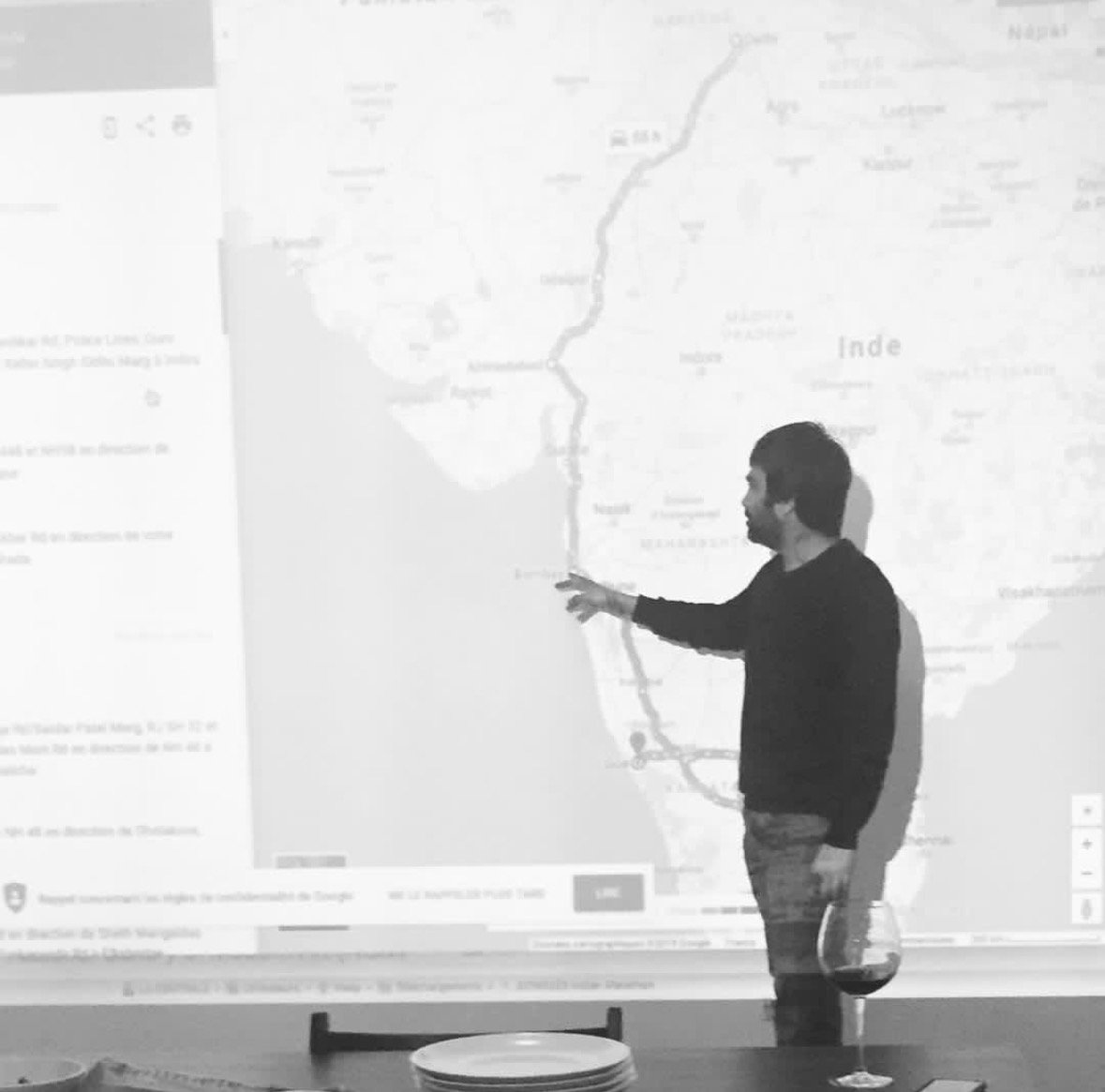
Outline of a Biennale de Paris in India: a 3,000-kilometre journey by red bus from New Delhi to Goa, inspired by Swami Vivekananda’s thought: “Take up one idea. Make that one idea your life.”
2020 — Questioning the mechanisms of recognition
The Biennale de Paris Prize introduced a random selection process, including the use of artificial intelligence, and rewarded a practice that does not involve producing objects or artworks. The initiative opened up discussion of criteria of judgement, hierarchies and access to artistic recognition.
Presentation of the Biennale de Paris Prize 2020 at Paris City Hall.
On 21 and 22 October, La Rentrée de l’art brought together artists and people from across society at Paris City Hall around a question: “Art in Crisis or a Crisis of Art?” In the face of upheavals in health, ecology and society, the gathering explored new models of creation, economics and education. It affirmed art’s capacity to transform its own conditions of existence and contribute to transforming those of society.
“Art in Crisis or a Crisis of Art?”, La Rentrée de l’art, organised by the Biennale de Paris at Paris City Hall, 21–22 October 2020.
2021 — Creating a theoretical space for invisual art
Corina Chutaux Mila published Aesthetics of Invisual Art. Presented on 10 November at the Palais de Tokyo bookshop, the book examines practices whose artistic existence does not depend on producing an identifiable artwork. It contributes to articulating and discussing the questions opened up by these approaches.
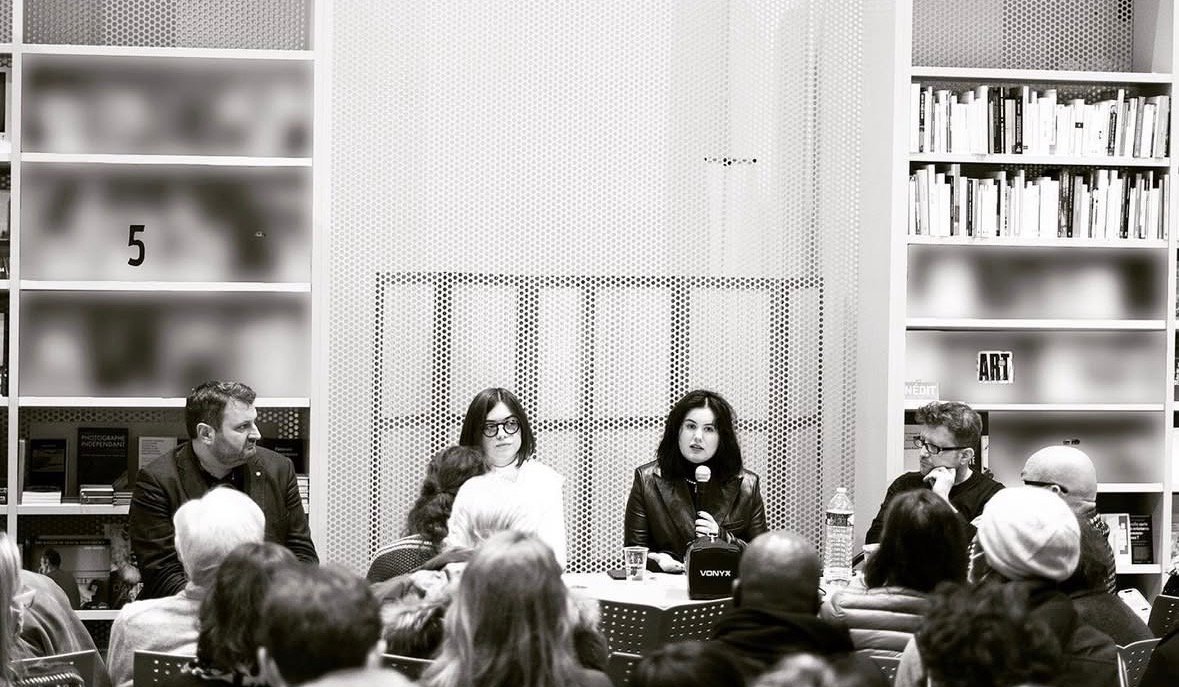
Launch of Aesthetics of Invisual Art by Corina Mila Chutaux, at the Palais de Tokyo, 11 November 2021. From left to right: Éric Monsinjon, Aurore Chevallier Gleizes, Corina Mila Chutaux, Alexandre Gurita
On 23 March, the gathering “Close Art Schools or Reinvent Them?” questioned the vulnerabilities of art education revealed by the pandemic. The Biennale invited a rethinking of content, methods and the conditions for educational continuity. It proposed seeing the school as a place of emancipation, capable of inventing its own models and responding to transformations in society.
2022 — Bringing research into debate
On 17 June, the international symposium “Invisual Art: Doxa and Paradox”, organised by Corina Chutaux Mila in partnership with the Biennale de Paris, took place at the Sorbonne. It brought together artistic and theoretical approaches to the definition of art, its uses and its forms of recognition.
International symposium “Invisual Art: Doxa and Paradox”, at the Sorbonne, Paris, 17 June 2022. From left to right: Éric Monsinjon, Alexandre Gurita and Corina Chutaux Mila.
2024 — Opening the twenty-fifth edition
The twenty-fifth edition began on 1 October 2024 and continued until 30 September 2026. It brought together the Biennale’s research and cooperation within a shared period. Projects in Bangkok and Toruń extended this momentum in 2025.
2025 — Bangkok and Toruń: working from local contexts
From 21 to 28 February in Bangkok, then from 20 to 23 May in Toruń, Poland, the Biennale de Paris continued its decentring. These gatherings extended an international dynamic based on encounters and exchanges, making each context a field for questioning artistic practices and conceptions of art.
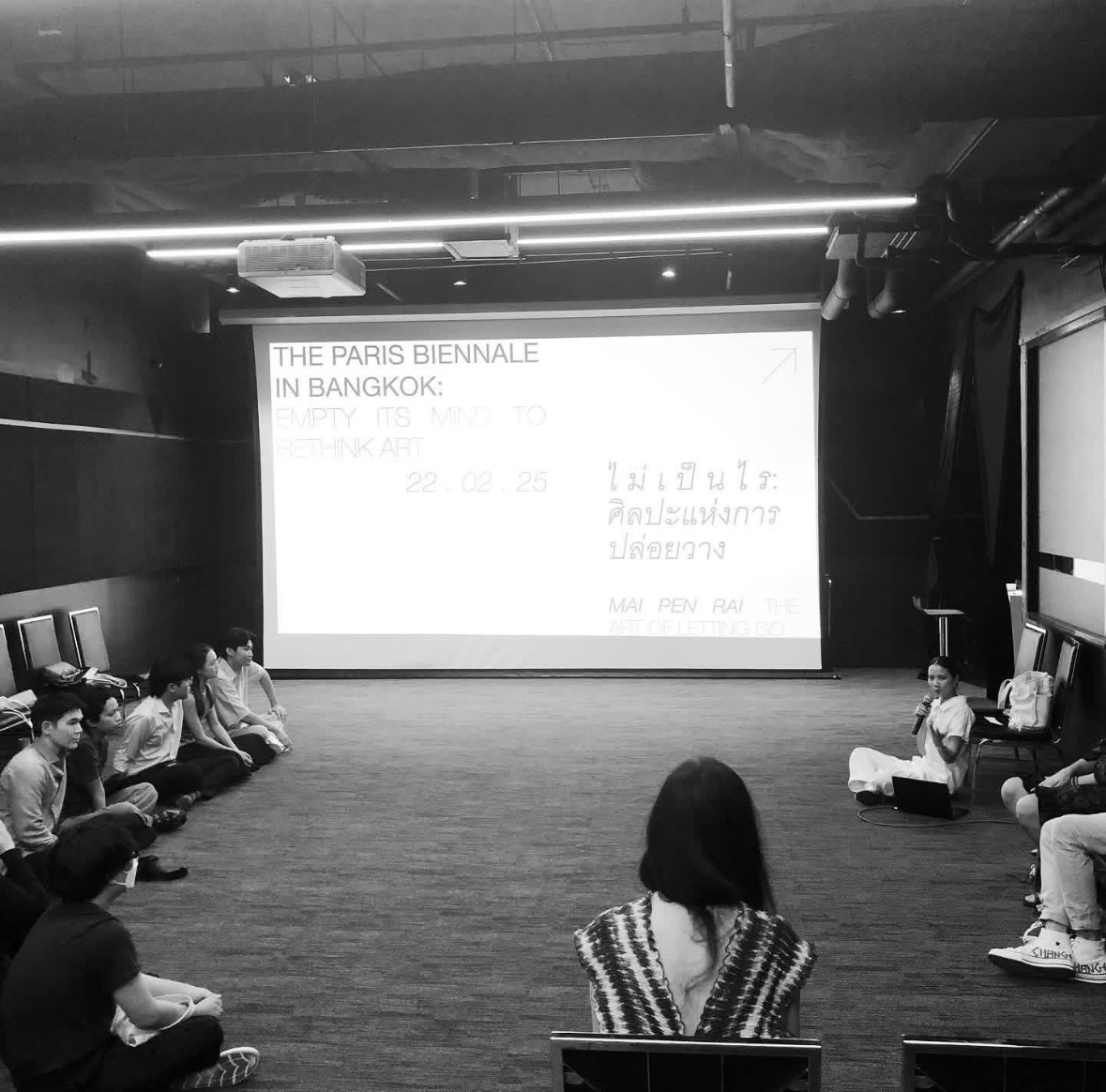
From 21 to 28 February, the Biennale de Paris in Bangkok developed around the proposition “Emptying Out to Rethink Art”. The project opened a space to reconsider the habits, expectations and frameworks through which an activity is recognised as artistic.
The Biennale de Paris in Bangkok, 21–28 February 2025. Gathering at RCB Forum, River City Bangkok.
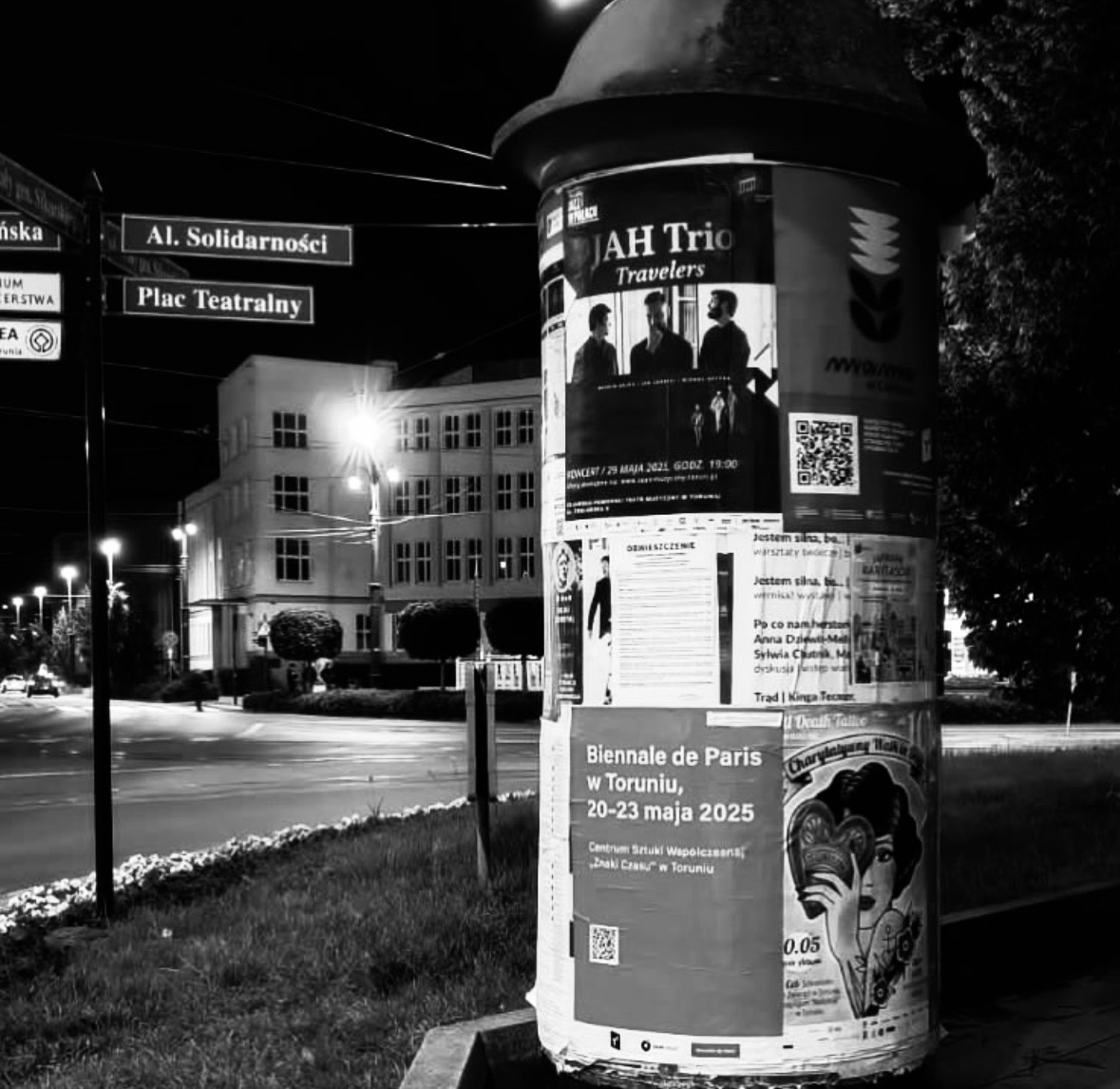
From 20 to 23 May, the Biennale de Paris in Toruń, Poland, was co-organised with the Centre of Contemporary Art “Znaki Czasu” and the Faculty of Fine Arts at Nicolaus Copernicus University. In Jerzy Ludwiński’s city, discussions focused in particular on the post-artistic era and the future of art collections.
The Biennale de Paris in Toruń, Poland, 20–23 May 2025.
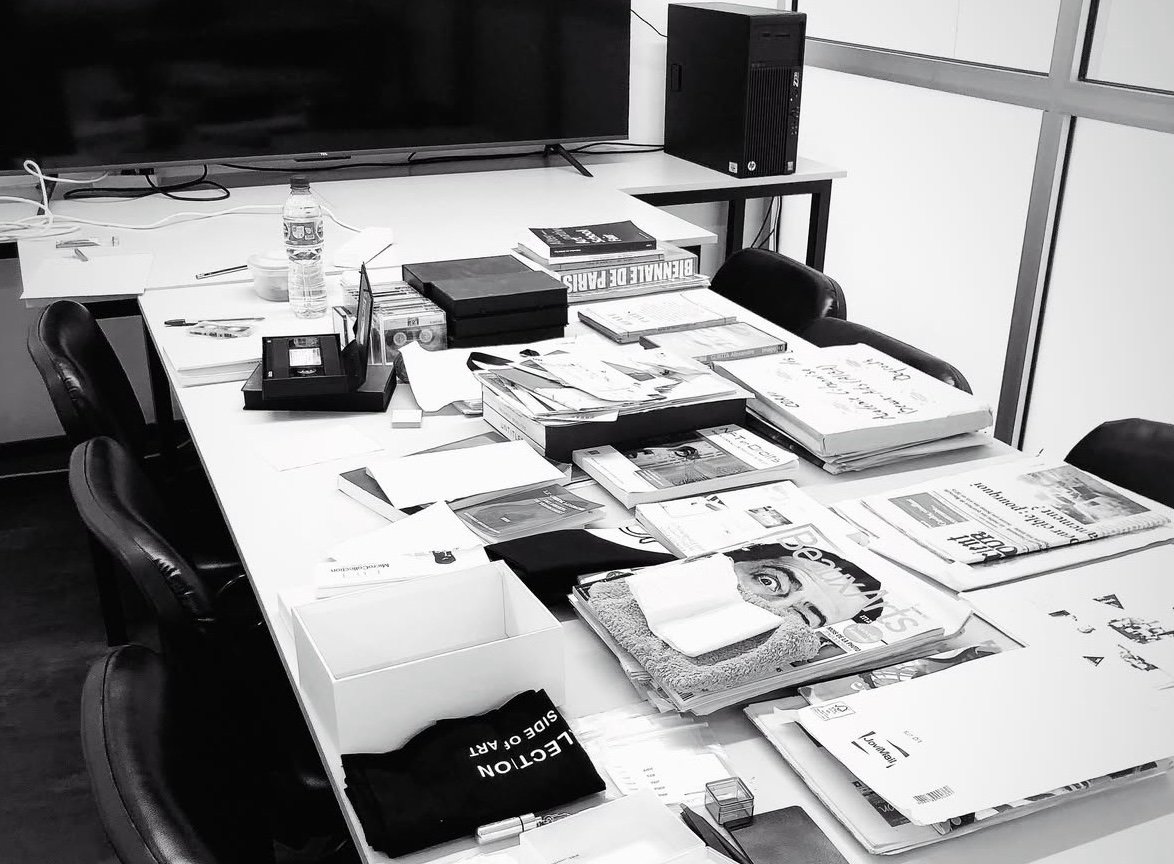
In partnership with the Lebanese Academy of Fine Arts (ALBA) – University of Balamand, in Beirut, the Biennale de Paris created the first collection of invisual art. This initiative shifts the notion of a collection: how can practices that exist in forms other than artworks be documented and passed on? It opens up research into the memory of these approaches and the conditions for their transmission.
Documents from the first collection of invisual art, created by the Biennale de Paris in partnership with the Lebanese Academy of Fine Arts (ALBA) – University of Balamand, in Beirut.
2026 — A new edition, new cooperation
The twenty-sixth edition opened on 1 October 2026 and runs until 30 September 2028. It brings together the events, research and projects developed over these two years.
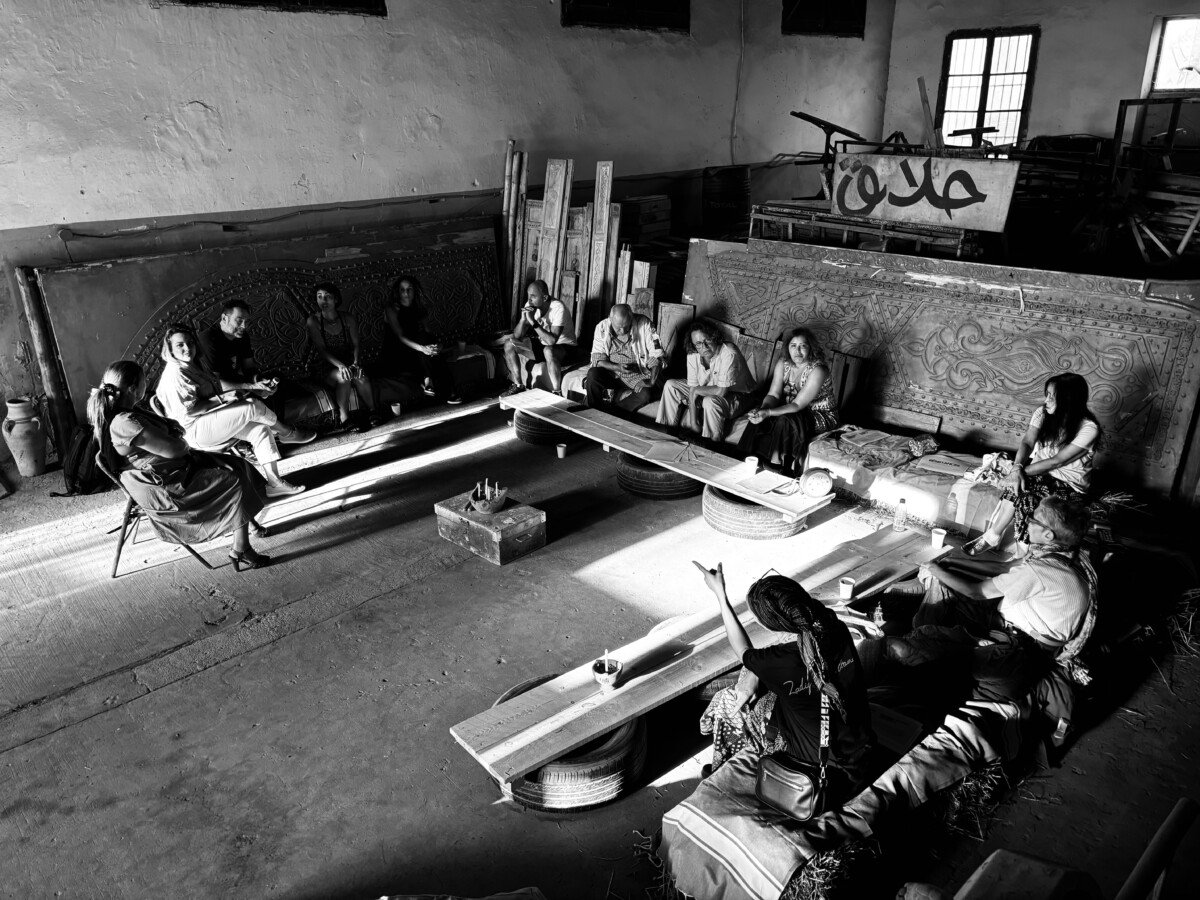
From 10 to 16 October, the Biennale de Paris in Tunisia unfolded in Tunis, Sousse, Hammamet and Béni Khalled. Without an exhibition, it brought together research, encounters and initiatives in which art enters directly into reality. Relationships, knowledge and lived situations became the fields for practices that exist in forms other than artworks.
The Biennale de Paris in Tunisia, 10–16 October 2026, in Tunis, Sousse, Hammamet and Béni Khalled. Le Verger de Carolina, Tunis.
In Paris, the opening of ENDA’s twenty-sixth session is announced for 19 November. The research and experimentation programme is due to continue until 25 June 2027.
2027 — Berlin, a project in development
Project announced as part of the twenty-sixth edition.
The Biennale de Paris in Berlin is being developed by the Institut de Donbat in collaboration with the Biennale. The project takes the economic fragility of Berlin’s artistic practices and venues as its starting point. It explores forms of cooperation, shared resources and autonomy.
The research and meetings already underway are part of the project. A public programme is announced for 1–30 October 2027 as a phase in which this work will intensify. The programme’s format may evolve as cooperation develops.
The history continues through the Biennale’s practices, research and cooperation.
Pour offrir les meilleures expériences, nous utilisons des technologies telles que les cookies pour stocker et/ou accéder aux informations des appareils. Le fait de consentir à ces technologies nous permettra de traiter des données telles que le comportement de navigation ou les ID uniques sur ce site. Le fait de ne pas consentir ou de retirer son consentement peut avoir un effet négatif sur certaines caractéristiques et fonctions.
Fonctionnel
Always active
L’accès ou le stockage technique est strictement nécessaire dans la finalité d’intérêt légitime de permettre l’utilisation d’un service spécifique explicitement demandé par l’abonné ou l’utilisateur, ou dans le seul but d’effectuer la transmission d’une communication sur un réseau de communications électroniques.
Préférences
L’accès ou le stockage technique est nécessaire dans la finalité d’intérêt légitime de stocker des préférences qui ne sont pas demandées par l’abonné ou l’internaute.
Statistiques
Le stockage ou l’accès technique qui est utilisé exclusivement à des fins statistiques.Le stockage ou l’accès technique qui est utilisé exclusivement dans des finalités statistiques anonymes. En l’absence d’une assignation à comparaître, d’une conformité volontaire de la part de votre fournisseur d’accès à internet ou d’enregistrements supplémentaires provenant d’une tierce partie, les informations stockées ou extraites à cette seule fin ne peuvent généralement pas être utilisées pour vous identifier.
Marketing
L’accès ou le stockage technique est nécessaire pour créer des profils d’internautes afin d’envoyer des publicités, ou pour suivre l’utilisateur sur un site web ou sur plusieurs sites web ayant des finalités marketing similaires.