The Biennale de Paris operates through a mycelial organisation. It develops through a network of people whose practices, research and initiatives intersect and reinforce one another. Roles define each person’s responsibilities, while collaborations take shape according to projects, contexts and affinities.
Alexandre Gurita
Director
Read biographyClose biography
Alexandre Gurita is an invisual artist, director of the Biennale de Paris, founded by André Malraux, and of ENDA (École nationale d’art de Paris), the first school dedicated to artistic research. In 2004, he invented the concept of invisual art, a genre of art that exists otherwise than as a material or immaterial artwork. According to art historian Éric Monsinjon, invisual art is defined by what it is not. By separating art from the artwork, invisual art heralds a Copernican revolution in twenty-first-century art. The artist considers the art system a working space. Art no longer exists within the artwork, but at the systemic level of the art field as a whole. He works through collective intelligence to bring about a substantial transformation of art. His approach revolves around two axes: asymmetry and the strategy of water. He practises institutional capture, which consists of creating or taking over institutions to transform them into critical institutions of change. Quotations by Alexandre Gurita: “Art is the art of art.” “Art is the shortcut between the impossible and the essential.” “We have no serious evidence that art depends on the artwork, and for this reason we may assume the opposite.” “Thinking art is dangerous; being thought by it proves fatal.”

Alexandra Péron
Partner artist
Read biographyClose biography
Alexandra Péron is an artist of kindness and a traveller. She was born before the Chernobyl disaster and after Afrika Bambaataa’s Planet Rock. Her practice follows the wind. Her strength lies in her ingenious ability to refuse to confine herself to a definition. Breton, of mixed French-Algerian heritage and a nomadic alchemist, she makes Freedom and Emancipation the driving forces of her methods of active kindness. With little interest in the forms of recognition associated with the ecosystems of contemporary art and the cultural industry, she focuses on the experience of form rather than form itself, whether making everyday objects such as jewellery or assisting artists as diverse as Laura Henno and Alexandre Gurita. She is a co-founder of the laboratory and collective Le pasLab, where she works as an artist and researcher in curaction. She is an artist of operational kindness and a maker of beneficial arrangements for those around her.
Gary Bigot
Partner artist
Read biographyClose biography
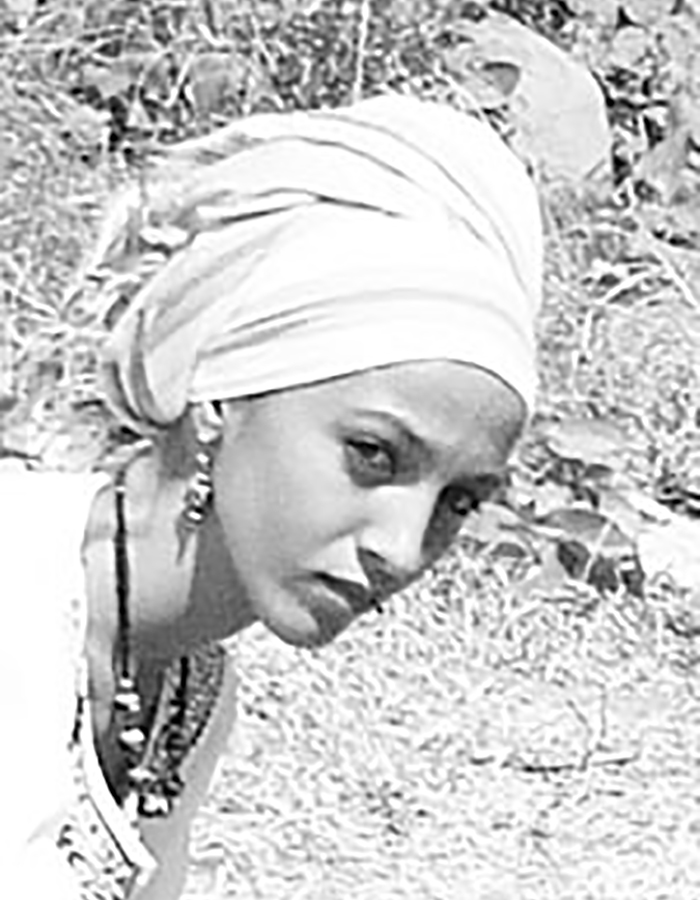
Artist. Initiator of the Biennale de Paris in Luxembourg. Active contributor to the Biennale de Paris. Considered one of the first invisual artists, Gary Bigot develops an artistic approach based on the idea that everything is made, produced and installed without any intervention on his part. He adopts the following radical resolutions in his practice: no production by oneself, no self-promotion, no personal profit and no personal ownership. Since 1985, his principle of hygrometry is to be considered his work. Its particular functioning refers back to each of us as sensitive, productive, knowing and communicative beings. He regards it as his self-portrait, or the “portrait of everyone”. This liberating act-position allowed him to consider, radically, that all his works are produced and installed, produce and install themselves, without his intervention. Producing more was, for him, superfluous and artistically unworthy. The opening created by this extreme and definitive attitude reveals unsuspected possibilities and invites reflection and creation. What happens afterwards no longer concerns him. He positions himself as an involved observer of his completed but not closed work. He sets his concept and attitude free and, should an external need arise, authorises anyone to use them to make works, exhibitions, discourses and so on, even to commercialise them for their own benefit. He has lectured at ENDA (École nationale d’art de Paris) and at the University in Belval, Luxembourg. Gary Bigot initiated the Biennale de Paris in Luxembourg (2018–2020), which took the form of an application enabling audience-users to geolocate themselves by blowing into a smartphone.

Ralf Porzel
Partner artist, Director of International Relations
Read biographyClose biography
Ralf Porzel is an artist and founder of La CoSAA (Constellation of Art Hosting Structures), whose motto is: Seek what connects us! He practises générosagesse, a form of invisual art that raises generosity to the level of wisdom and optimism to the level of virtue, bringing people together around joy, courage, sharing and meaning. La CoSAA makes places where life has gradually faded available to invisual artists, with the aim of bringing these places back to life and promoting these artistic practices. La CoSAA provides resources for the artistic dynamics it supports, handling logistics and planning as well as archiving the content developed during events. Ultimately, La CoSAA seeks to bring joy into our lives. The artist believes that being able to devote one’s life to a cause is a privilege, because it is an expression of greatness and freedom, and a source of pleasure.
Mariem Memni
Partner artist
Read biographyClose biography
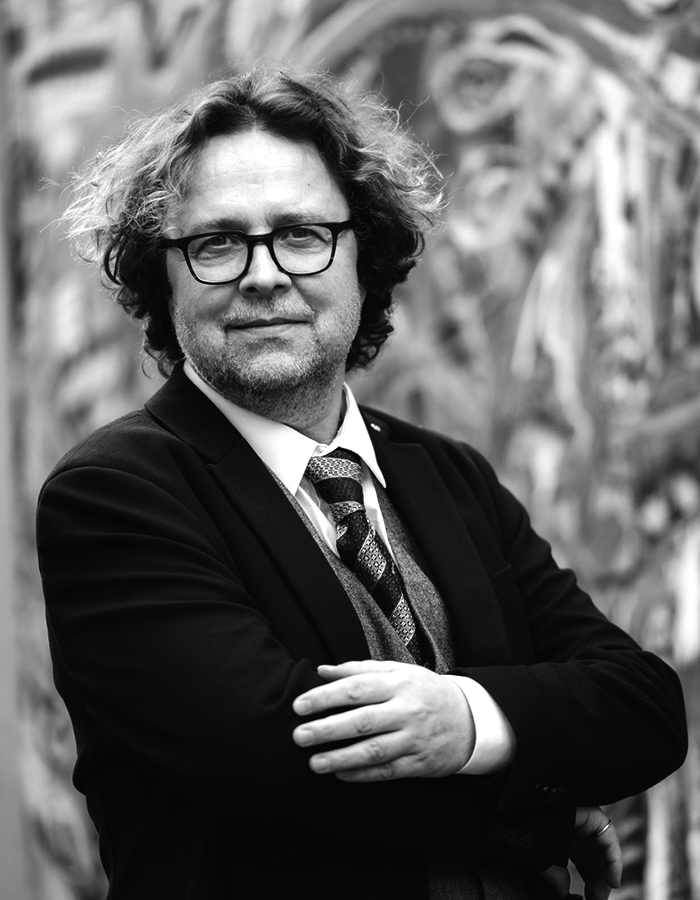
Mariem Memni is an invisual artist, migrologist and director of the European School for the Integration of Migrants through Art (EEIMA). Founded in 2021, EEIMA is based in Brussels. She holds a Master’s degree from ISBAS (Higher Institute of Fine Arts of Sousse, Tunisia), as well as a DNREA (National Diploma in Research and Experimentation in Art) awarded by ENDA (École nationale d’art de Paris) in 2021. She develops chata, an invisual practice she initiated and defines as a process of converting negative energy into positive energy, ensuring harmony within a group. She considers life a continuous performance, an artistic process she calls lifeformance. She also created migrology, a creative science that approaches migration phenomena as artistic processes in which every migrant is considered a potential artist. EEIMA is founded on the conviction that art can support the integration and emancipation of migrants. She has modelled an adaptation scale, an assessment framework measuring both migrants’ adaptation to their host context and the reciprocity of this integration.

Ghislain Mollet-Viéville
Art agent, adviser
Read biographyClose biography
Ghislain Mollet-Viéville is an art agent and adviser, art critic, honorary expert to the Paris Court of Appeal and member of the International Association of Art Critics (AICA). An active contributor to the Biennale de Paris, he is one of the most active collaborators of both the Biennale de Paris and the Revue de Paris. To champion artistic practices beyond traditional frameworks, he initiated the profession of art agent, aiming to manage art in its relations with society. Since 1994, his apartment on Rue Beaubourg, which he occupied between 1975 and 1992, has been reconstructed identically and permanently displayed, together with his collection of minimal and conceptual art, at the Museum of Modern and Contemporary Art in Geneva (Mamco). Ghislain Mollet-Viéville involves different bodies within society to update the ways in which works are produced, disseminated, acquired and actualised when their originality requires unprecedented principles of presentation and activation. With him, the art object is no longer the object of art! His actions give considerable attention to the status of art, both materially and intellectually, in interpreting works in relation to a particular time and place.
Éric Monsinjon
Art theorist, adviser to the director
Read biographyClose biography
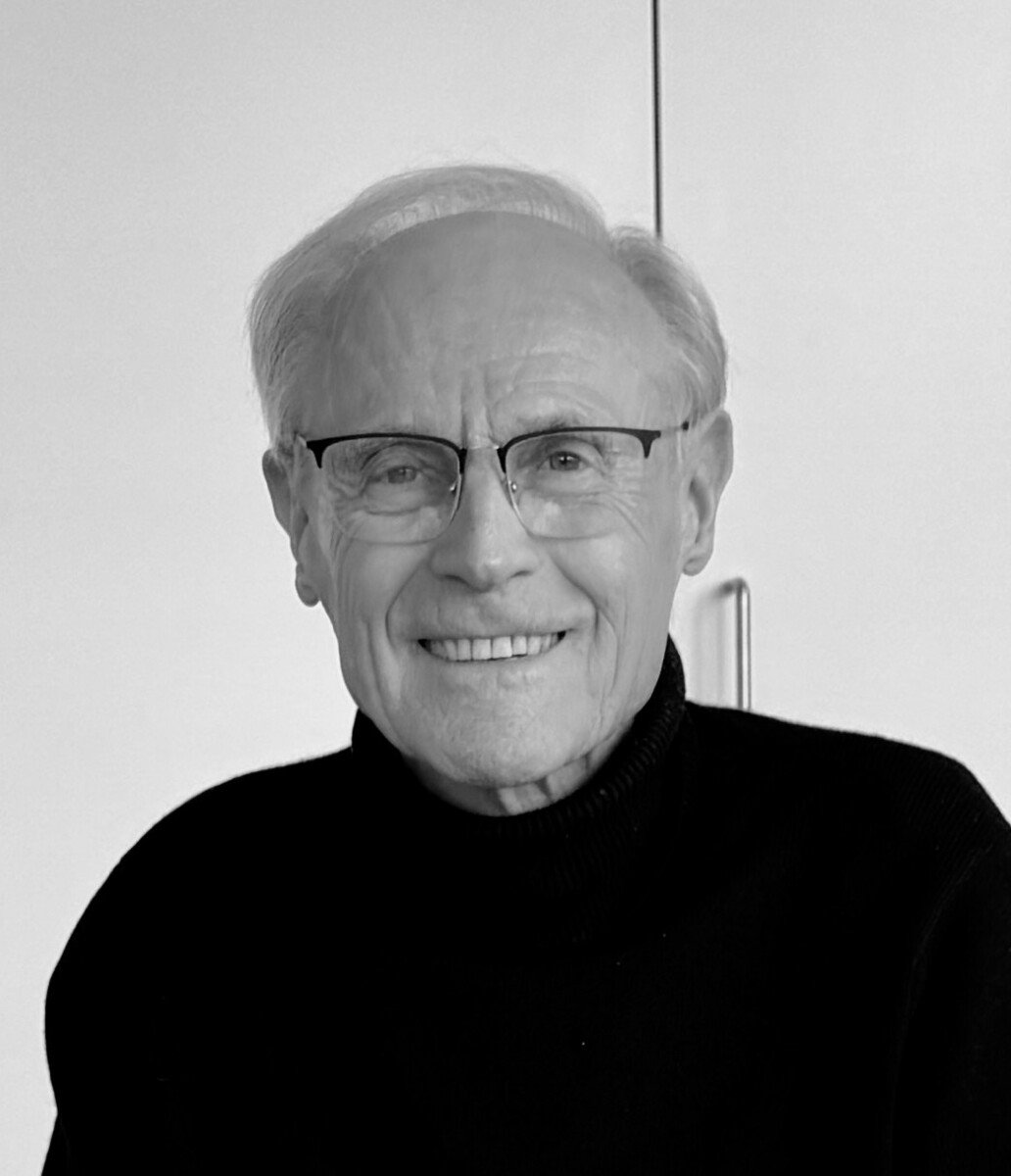
Philosopher and art historian. He originated the theory enabling the creation of new arts. A major contributor to the Biennale de Paris in the field of art history, Éric Monsinjon specialises in the artistic avant-gardes of the twentieth century and experimental contemporary art. His research focuses in particular on French avant-garde movements such as Lettrism and the Situationist International. He teaches art history at the Académie de la Comédie-Française in Paris, ENDA (École nationale d’art de Paris), and various art schools in France. He is also the founder of L’Anti-Esthétique, a Mediapart blog devoted to experimental research in art for the general public. He is currently developing a general theory of the formation and formalisation of new arts. Through appropriate actions and means, this involves consciously and methodically transforming certain human activities or non-artistic fields of knowledge into autonomous arts. He considers that creation should take place not only at the scale of an artwork, but also at the scale of an art. In 2023, together with José Manrubia and Alexandre Gurita, he took part in founding a new art: Corrida Etica.

Loli Tsan
Adviser
Read biographyClose biography
A specialist in applying invisual art to music and a contributor to the Biennale de Paris, Loli Tsan grew up in a family of composers. A classical pianist, she holds a piano diploma from the École Normale de Musique, a postgraduate doctorate from Paris IV and a Ph.D. in Romance Linguistics and Literatures from UCLA. She is a professor of medieval literature at the State University of New York. She is the author of a dissertation entitled Fragmentation et Écriture du Corps au Moyen-Âge, numerous articles on the reception of globalisation in France and twelfth-century Romance literature, and a book entitled L’Art à l’épreuve de la singularité. Loli Tsan has presented different aspects of her research at numerous conferences at universities in the United States, China, Brazil and Tunisia, and across Europe in France, Greece, Italy and Belgium. Her current research concerns Music beyond Sound and the parallels between invisual art and sonic disintegration in music. In collaboration with Alexandre Gurita, she is recording a series of courses on the dematerialisation of music for Enda Autonome, the online version of ENDA (École nationale d’art de Paris).

Elisa Bollazzi
Partner artist
Read biographyClose biography
Elisa Bollazzi is considered one of the first invisual artists. She is the director of MicroCollection. Her artistic practice began in 1990 and consists of stealing tiny fragments of works from museums, galleries and exhibitions. Her resolutely ecological approach—adding nothing to what already exists, working with what is there—rests on the appropriation and collection of what she calls microelements. She acts as a silent parasite, producing nothing but transforming the gesture into an artistic act. She installs Cabinets de Regard and invites audiences to observe these microelements through a microscope. Today, MicroCollection comprises more than 2,000 fragments of works by artists from around the world, famous or anonymous, arranged alphabetically. Every sample is carefully archived. Operating in the shadows, Elisa Bollazzi works on the margins of the traditional art system, which she challenges peacefully and constructively without ever leaving the game.

Ricardo Mbarkho
Partner artist
Read biographyClose biography
Ricardo Mbarkho is an invisual artist, assistant professor, director of research and director of the Research and Creation Centre at the Lebanese Academy of Fine Arts (ALBA, University of Balamand). He explores and theorises the aesthetic, economic, political and social conditions of an art that moves beyond the idea of the artwork and the audience: a post-immaterial art, without material or immaterial objects. He conducts research-creation into an art without art, in which the medium of artistic practice becomes the socioeconomic model itself. He holds a doctorate from Université Sorbonne Paris Nord. His recent speaking engagements include Aix-Marseille Université, ANdEA, Ars Electronica, Jeu de Paume, MUCEM, Transmediale, UNESCO and the World Summit Contributory Conference on ICT & Creativity. He initiated ARCAI (Atelier de Recherche et Création Art Invisuel) and the Collection Art Invisuel, the first invisual art collection, which radically redefines the notion of an art collection. He has given lectures and led workshops at Aix-Marseille Université, ANdEA (Strasbourg), Ars Electronica (Linz), the Biennale de Paris, ENDA (École nationale d’art de Paris), ENSBA, Jeu de Paume (Paris), MUCEM (Marseille), Transmediale (Berlin) and UNESCO (Paris).

Jérémie Pujau
Partner artist, Director of the Biennale de Paris in Germany
Read biographyClose biography
Jérémie Pujau is a French artist and filmmaker based in Berlin, founder and director of the Institut de Donbat. He has been director of the Biennale de Paris in Berlin since spring 2026. His practice develops through situated interventions in the social field, at the intersection of images, politics and public space. He is interested in collective behaviour, narratives of power, social structures, colonial continuities, nationalism and the political economy of art. His work long took the form of performances, videos, sculptures, photographs and installations before moving towards an invisual approach. He joined ENDA (École nationale d’art de Paris) in 2025. In 2016, he took part in the filming of Ai Weiwei’s Human Flow. He works for ARTE on the series Unhappy. Within the Institut de Donbat, he develops the Donbat methodology, its research-action projects, intervention frameworks and forms of transmission.
Roxane Vidalon
Partner artist
Read biographyClose biography
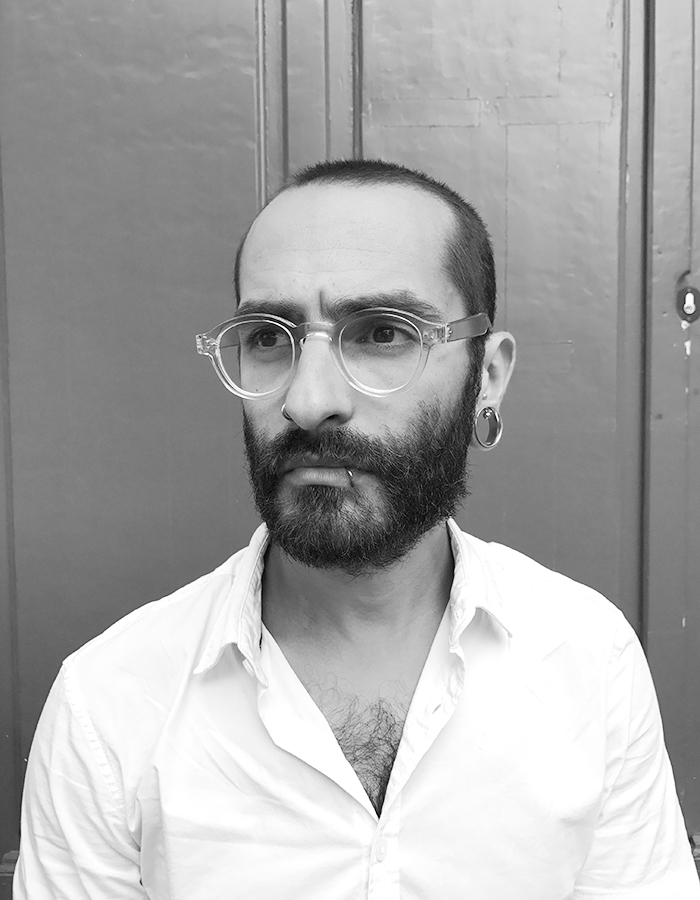
Director of IAPI (Institute of Philosophical and Invisual Art), which offers an invisual art residency, theoretical contributions, documentation and training. A researcher in philosophical and invisual art and a philosophical artist, Roxane Vidalon is currently pursuing a Master’s degree in aesthetic research (philosophy and psychoanalysis of art) at the University of Montpellier, France. A graduate of ENDA (École nationale d’art de Paris), she has proposed opening a Line of Research and Experimentation (LDRE) entitled “Theoretical and Philosophical Foundations of Invisual Art”. She previously taught contemporary dance at the Conservatoire of Tarbes, France, before turning to visual arts, including tattooing and illustration, in 2016. In 2018, she committed fully to the visual arts, deepening her research while continuing to develop her philosophical thinking. Her approach had already led her to begin a philosophy degree in 2013 with the aim of bringing together artistic practice and philosophical reflection. In 2023, Roxane Vidalon decided to set aside the production of artworks to devote herself to an in-depth study of art, matter and its abstraction. In March 2024, she founded the Institute of Philosophical and Invisual Art (IAPI), which was publicly launched that same year. Her latest article, L’Œufre au Rose, appeared in the Revue de Paris (no. 54) in February 2024. Her most recent lecture on invisual art, entitled “Is Art False? Invisual Art as an Answer”, took place in July 2024 during the Semaine des Arts in Soueich (Haute-Garonne, Occitanie, France). An article about her work by Stéphane Boularand, “Roxane Vidalon, Invisual Art to Push the Boundaries”, was recently published in La Dépêche in May 2024.

Robert Storr
Adviser for the Biennale de Paris in the United States
Read biographyClose biography
Writer, artist and art critic, former dean of the Yale University School of Art and member of the Art Advisory Council of the International Foundation for Art Research. Co-organiser of the Biennale de Paris in New York. Robert Storr was the first American director of the Venice Biennale. He was chief curator in the Department of Painting and Sculpture at MoMA, New York, from 1990 to 2002. He writes for numerous newspapers and magazines, including Art in America, Artforum, Art Press, The New York Times, The Washington Post, The Village Voice, Interview, Parkett and Frieze. Selected publications include In direzione ostinata e contraria: scritti sull’arte contemporanea (2011), September: A History Painting by Gerhard Richter (2009) and Gerhard Richter: the Cage Paintings (2009). He states: “Today, what artists do is so varied and so widely dispersed that it is genuinely futile to concern oneself, as in the past, with a major artistic trend. If, like me, one thinks of art as a vast estuary made up of many channels of different widths, depths and flow rates, the conclusion is that one should not follow only the widest and fastest channels. One must also explore the narrower and slower ones, sometimes the deepest, or those that take surprising and mysterious directions. Since there are many ways to map such a space, but no way to travel through it in its entirety, my strategy has been to try to follow one current after another, in a way that provides an overview of the whole landscape while focusing my attention on certain regions. I simply no longer accept the idea that there is a main circuit of art.”

Sylvain Soussan
Partner artist
Read biographyClose biography
Artist and founder of the Musée des nuages (Museum of Clouds), notably responsible for extending the duration of an edition of the Biennale de Paris to two years. The Musée des nuages takes an interest in technologies that reduce carbon or radioactive emissions: wind turbines, underwater turbines, photovoltaics and embodied energy. Mobilising human energy is itself a resource that the Musée des nuages seeks to value by transforming the perception of works into works of perception. He introduced ecology into art in the 2000s.

Yosr Mahmoud
Partner artist
Read biographyClose biography
Yosr Mahmoud is an invisual matriartist. She holds a Master’s degree from ISBAS (Higher Institute of Fine Arts of Sousse) and is a graduate of ENDA (École nationale d’art de Paris), Paris. She develops the Aesthetics of Hospitality, a set of practices of welcoming and conviviality. This aesthetics transcends the artwork and lays the foundations for a distinct category within invisual art based on hospitality. She introduced the term matriartist to give authorship a gendered dimension and foreground women artists who are mothers in a world dominated by patriarchy. She shows how matrimonial traditions of hospitality, such as el walima, a Tunisian ritual of sharing, possess an aesthetic potential that can be reactivated in a contemporary context to counter individualism and hostility. The Aesthetics of Hospitality redefines art as an inclusive process in which sharing and conviviality are essential to creation. Thus, the boundaries between ethics and aesthetics, and between art and everyday life, dissolve.

Paul Ardenne
Art theorist
Read biographyClose biography
Contemporary art historian, critic and exhibition curator. Active contributor. Paul Ardenne devotes himself to exploring contemporary art, with a particular interest in the interactions between art, society and the environment. The author of numerous influential books, he explores subjects such as environmental aesthetics, public art and the relationship between art and ecology. His publications include Art, l’âge contemporain (1997), L’Art dans son moment politique (2000), Un Art contextuel (2002), Extrême – Esthétiques de la limite dépassée (2006), Images-Monde. De l’événement au documentaire (with Régis Durand, 2007), Art, le présent. La création plastique au tournant du 21e siècle (2009) and Un Art écologique (2018). His forthcoming book Hors de vue – De l’invisuel et de la minoration physique de l’art is scheduled for publication in late 2024. Paul Ardenne has curated numerous exhibitions, including Micropolitiques (Magasin, Grenoble, 2000), Expérimenter le réel (Albi–Montpellier, 2001 and 2002), Working Men (Geneva, 2008), La Force de l’art at the Grand Palais in Paris (2006) and the Luxembourg Pavilion at the 56th Venice Art Biennale (2015). He actively collaborates with the Biennale de Paris and ENDA. He was the first art theorist to write about the Biennale de Paris under Alexandre Gurita’s direction in 2000, with his text Expérimenter une biennale, published as the preface to the catalogue of its fourteenth edition in 2004.

Éric Létourneau Dumaine
Partner artist, Director of the Biennale de Paris in Burundi
Read biographyClose biography
Éric Létourneau Dumaine has been an extradisciplinary artist working on a transfinite scale since the late 1980s. He is a professor at the Université du Québec à Montréal and director of the Laboratoire Musiques cachées within the Groupe de recherche-création en médiatisation du son (https://laboratoire-musiquescachees.uqam.ca). His work explores the relationship between art and life, the sonification of reality, the commons and the dematerialisation of art. He produces podcast series and radio art for various public broadcasters and online, notably with WRC (https://soundcloud.com/wikiradio-canada). He has presented his practice in more than fifteen countries around the world. He has written on art in action, sound and digital practices, and intangible cultural heritage for Inter, Les Presses du réel, Éditions de l’immatériel, Esse, TOPO, The Thing, Recherches en esthétique, Non-Grata, New Star Books, Lux, PUM and PUL.

Tomasz de Rosset
Adviser, initiator and co-lead of the Biennale de Paris in Poland
Read biographyClose biography
Historian of art collecting from the seventeenth to the twenty-first century. Co-coordinator of the Biennale de Paris in Poland. Tomasz de Rosset specialises in art collecting from the seventeenth to the twenty-first century. He explores the notion of the art collection in its most classical sense while taking an interest in invisual art, which completely challenges the traditional conception of an art collection. In particular, he considers the possibility of collecting seemingly uncollectable forms of art, such as invisual practices.

Gilbert Coqalane
Partner artist
Read biographyClose biography
An urban invisual artist, board member of the Fédération de l’Art Urbain and educator working in schools, Gilbert Coqalane initiates Biennale de Paris projects relating to intellectual property, training and disruption. Awarded a DNREA by ENDA (École nationale d’art de Paris) in 2021 and president of the publishing house L’Armée Recrute, he inaugurated the C.D.R.A.O. (Centre for Documentation, Research and Application of Offensives) in Nancy in 2021, a place for creating, developing and promoting “disruption” and the “offensive” as artistic actions. Perturbationism constitutes the first invisual art movement in history. It was officially launched on 1 November 2021 in Nancy. For the artist, disruption constitutes an artistic language. It is defined as an action intended to disrupt the reality of a public space or its users’ perception of it. A set of disruptions constitutes an “artistic offensive”. The aim of an artistic offensive is to bring about results in reality, in public space. Perturbationism has strong connections with urban art and art in public space. Its main objective is to apprehend reality and attempt to modify it through disruption. A disruption is invariably critical, because it challenges the established order.

Rose Marie Barrientos
Art theorist
Read biographyClose biography
Doctor of argumentation. A contributor to the Biennale de Paris, particularly in the field of theory, Rose Marie Barrientos explores the possibility of art as argument, starting from an understanding of art as a form of thought, discourse and knowledge. More specifically, she is interested in artist organisations, known as “critical enterprises”, which form the focal point of her research. This historian and argumentation specialist has formulated a methodology based on argumentation that enables art history to be written using tools borrowed from that discipline. Her approach rests on analysing the argumentative strategies artists use to give meaning to their work rather than their production of artworks, whether visual or invisual. She prioritises argumentative elements and the dynamics of argument over the form and content through which they are conveyed. She regularly participates in the activities of the Biennale de Paris.
