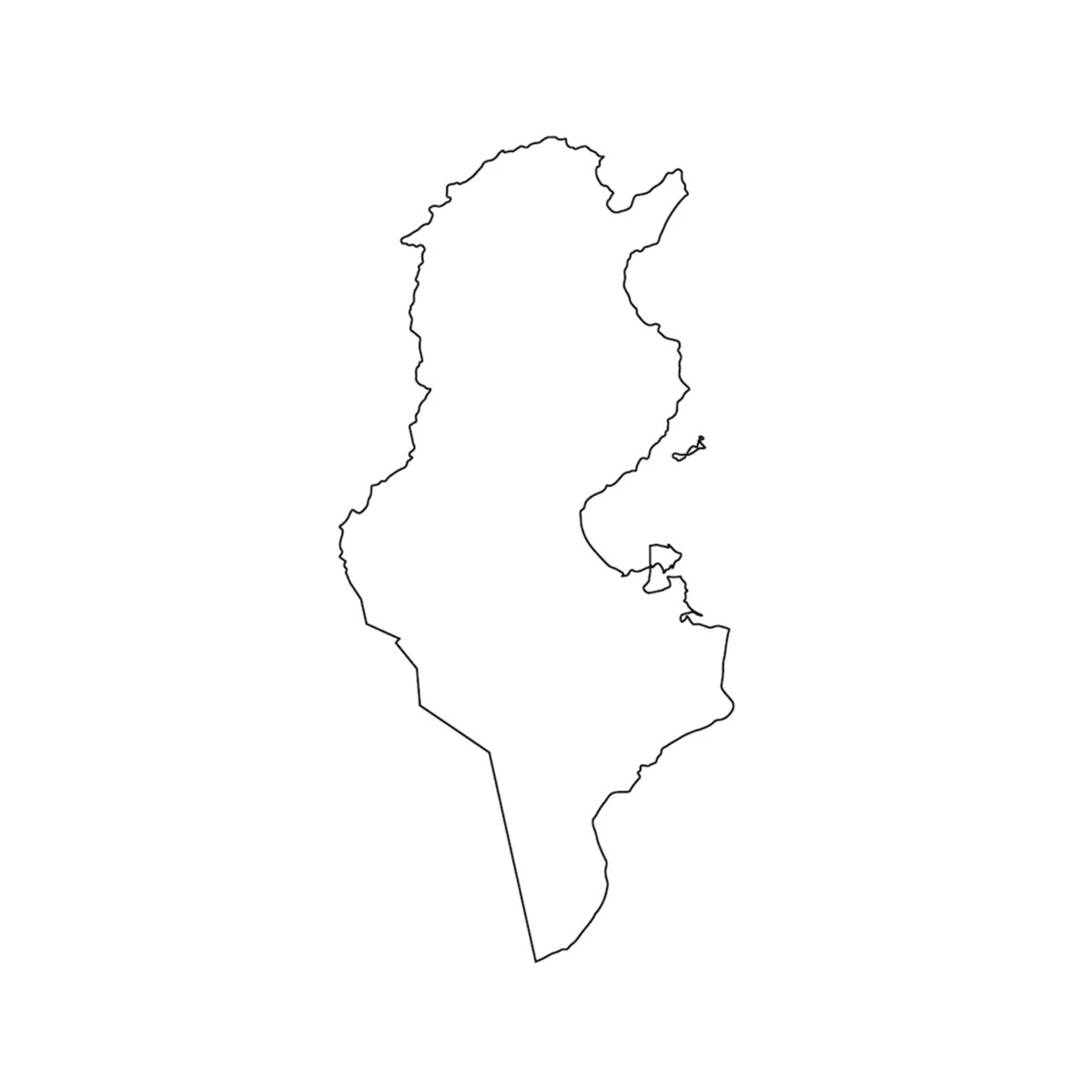
The Paris Biennale in Tunisia

The Paris Biennale in Tunisia
From 10 to 16 October 2026, the Paris Biennale will bring its research, practices and modes of operation to Tunisia, in collaboration with Tunisian and international artists, authors, researchers, institutions and organisations. The Paris Biennale is a horizontal institution that develops a model based on experimentation, research, artists’ autonomy and the possibility of making art exist outside the traditional frameworks of exhibition. The Paris Biennale in Tunisia continues this approach.
Beyond the Exhibition
A biennale is not necessarily an exhibition. The Paris Biennale explores other ways of conceiving an international art event. It does not rely on a centralised model in which a selection of artworks is brought together in a single venue. Artists and authors are invited to determine for themselves the forms their research and practices may take.
This approach enables the Paris Biennale to develop across different territories, working with local partners and artistic communities while maintaining its independence. The Paris Biennale in Tunisia is therefore conceived as a research and creation project rather than simply an exhibition.
Tunisia
The relationship between the Paris Biennale and Tunisia has developed over several years through encounters, research and collaborations. Tunisia represents a particularly important context for the development of new artistic practices and for reflection on the relationships between art, society, territory and hospitality.
Encounters and research have been conducted with Tunisian artists, researchers and institutions, particularly around invisual art and new forms of research and creation. The Paris Biennale in Tunisia extends this work through new encounters, projects and collaborations.
Invisual Art
Invisual art is one of the fields of research developed by the Paris Biennale. Invisual art refers to an art that exists otherwise than in the form of an artwork. It therefore does not necessarily involve producing a painting, sculpture, installation, performance or any other object intended to be identified as an artwork.
Reality itself can become the medium of an art freed from the medium of art. This research opens up the possibility of considering artistic activity in terms of what it can produce, transform or bring into relation, rather than through the production of an art object or image. The Paris Biennale in Tunisia provides one of the contexts in which this research can be experimented with, discussed and developed.
An International Platform
The Paris Biennale in Tunisia brings together artists, authors, researchers, institutions and cultural actors from different backgrounds. It encourages exchanges between artistic practices and local contexts, enabling research developed in Tunisia to encounter research conducted in other territories.
The Paris Biennale thus operates as an international, decentralised and evolving platform, with each new location constituting a new context for research.
2026 Edition
The Paris Biennale in Tunisia will take place from 10 to 16 October 2026 through a programme of encounters, presentations, conferences, dynamics, research and projects involving Tunisian and international participants.
The detailed programme, venues, participants and individual events will be published progressively on this page.
Partners
The Paris Biennale does not operate according to the traditional model of an exhibition biennale. It does not select artists in order to “exhibit” them in a designated venue, nor does it constitute a group exhibition bringing together artworks under a single curatorial framework. The people and organisations taking part in its activities are partners of the Biennale.
Being a partner means participating directly in the dynamics of the Biennale by developing research, a proposal, an action, a project or an operative form, according to one’s own methods. The Paris Biennale thus creates a framework for cooperation rather than a system of presentation: each partner retains their autonomy and contributes, in their own way, to making the Biennale exist.
For this edition, two categories of partners are brought together: artists, researchers and practitioners, and institutions, organisations and operative forms. This diversity is one of the defining characteristics of the Paris Biennale: it brings together individuals, collectives, institutions and organisations that are not necessarily actors within the art world in the traditional sense, but which actively contribute to research and the transformation of artistic practices.
Artists, Researchers and Practitioners
Yosr Mahmoud, Amel Djait, Elisa Bollazzi, Mariem Memni, Alexandra Péron, Bechir Gorchène, Jérémie Van Moll, Jeremie Pujau, Ricardo Mbarkho, Camille Cottet, Alexandre Gurita, Ralf Porzel, Christine Aupetit-Porzel, Simon Porzel, Soltani Ghazaleh, Loli Tsan, Èric Létourneau Dumaine, Rochdi Belgasmi, Jean-Christophe Trentinella.
Institutions, Organisations and Operative Forms
ENDA (École nationale d’art de Paris), Rotary Club Tunis Littérature, Jardin des Murmures, Aouina, Inspiration Plus, École Européenne pour l’Inclusion et l’Émancipation par l’Art (EEIMA), Constellation des Structures d’Accueil d’Art (CoSAA), MicroCollection, Encyclopédie des Obsessions, ARCAI (Atelier de Recherche et Création Art Invisuel) – Académie Libanaise des Beaux-Arts – University of Balamand, Institut de Donbat (ID).
Guest of Honour
Kian Ban
Press and Communications
Press kit
Press release
Programme
Contact
Email: secr-pr@biennaledeparis.fr